

Sobriety symbols represent strength, transformation, and lifelong healing. Whether it’s a medallion you carry in your pocket or a tattoo on your wrist, these recovery symbols serve as powerful reminders of personal growth – anchoring you to the commitment you’ve made to a sober life, even on the hardest days. Symbols can inspire perseverance in recovery journeys, helping bridge the gap between mental health struggles and addiction recovery by making abstract progress feel real and visible.
The right sobriety symbol depends on where you are in your recovery journey, your personal values, and what kind of visual reminder resonates most. Below, we break down seven of the most meaningful symbols of sobriety, what makes each one effective, and how to choose the one that fits your life.
How We Chose the Best Sobriety Symbols
Not every symbol carries the same weight for every person. We evaluated each symbol based on factors that matter most in real-world recovery:
- Recognition within the recovery community and broader mental health awareness
- Depth of symbolic meaning and connection to core recovery themes
- Versatility of display options (tattoos, jewelry, artwork, personal tokens)
- Historical significance in sobriety movements
- Personal resonance and emotional impact across different backgrounds
- Accessibility and ease of incorporation into daily life
A purple ribbon, for example, is the official color of addiction recovery awareness, but these seven symbols go deeper – offering hope, meaning, and motivation that lasts beyond a single awareness campaign.
Top 7 Symbols of Sobriety for Recovery
1. The AA Triangle and Circle
The AA triangle and circle is the most recognized sobriety symbol in the world. Adopted at Alcoholics Anonymous‘s 20th International Convention in 1955, this aa symbol has anchored millions of personal journeys through substance abuse and alcohol dependence for over seven decades.
Why It Stands Out
This aa triangle is widely recognized across recovery communities worldwide. The Serenity Prayer – a common reminder of acceptance, courage, and wisdom in recovery – is often paired with this symbol at meetings and on medallions, creating a layered sense of purpose.
Best For
People in 12-step programs and those who value traditional recovery approaches grounded in community support.
Key Strengths
- The AA triangle symbolizes unity, recovery, and service – each side of the triangle represents a key aspect of sobriety
- The triangle is enclosed within a circle representing wholeness and fellowship
- The triangle symbol encourages balance in mental, physical, and spiritual health
- Functions as the foundational aa symbol across 180+ countries
Possible Limitations
- May not resonate with those outside AA programs or who prefer secular recovery
- Some individuals prefer more personal or unique symbols over institutional ones
2. The Semicolon
What started as a punctuation mark became one of the most meaningful recovery symbols of the past decade. Project Semicolon, founded in 2013 by Amy Bleuel, transformed this simple symbol into a global movement spanning mental health and addiction recovery.
Why It Stands Out
The semicolon symbolizes continuation in mental health recovery. It represents a moment when one could have ended their life but chose not to. The semicolon signifies that your story isn’t over yet. In a survey of over 1,100 participants, 79% reported an internal shift from symbolic action, and 74% described their semicolon tattoo as more than art – it was a declaration.
Best For
Those who want a subtle, modern symbol with deep meaning that crosses mental health conditions and substance use recovery.
Key Strengths
- Represents continuation and choosing to keep going despite mental health challenges
- Small and discrete for tattoos or jewelry
- Crosses multiple recovery communities and mental illness awareness spaces
Possible Limitations
- May be too subtle for some preferences
- Meaning not immediately obvious to others without explanation
3. The Phoenix
The phoenix symbolizes rebirth and transformation in recovery. This mythical bird from ancient Greek, Egyptian, and Persian traditions carries one of the most dramatic recovery metaphors: complete destruction followed by renewal.

Why It Stands Out
The phoenix rises from its ashes, representing resilience and the capacity to rebuild after losing everything. Many in recovery relate to the phoenix’s story of rebuilding life from nothing. The phoenix represents overcoming adversity and emerging stronger – a powerful symbol for anyone who has faced rock bottom.
Best For
People who’ve experienced significant loss or crisis and rebuilt their lives through overcoming addiction.
Key Strengths
- Symbolizes strength, rebirth, and new beginnings
- Visually striking for artwork and tattoos
- The phoenix symbolizes transformation and resilience across cultures
Possible Limitations
- Can be large and complex for small displays
- May feel too dramatic for some personal styles in early recovery
4. The Lotus Flower
The lotus flower symbolizes rebirth and resilience in recovery, drawing from centuries of Buddhist and Eastern spiritual tradition. Its meaning is rooted in a simple biological fact: lotus flowers grow in muddy water, symbolizing growth through adversity.

Why It Stands Out
The lotus flower blooms beautifully above the surface of murky waters. This natural process mirrors the recovery journey – beauty, inner peace, and healing emerging from suffering and darkness. The lotus flower symbolizes rebirth and growth from adversity without requiring the dramatic “destruction” narrative of the phoenix.
Best For
Those drawn to spiritual symbols, natural imagery, and themes of gradual personal growth.
Key Strengths
- Represents purity, enlightenment, and spiritual growth
- Beautiful aesthetic appeal for various displays
- Emphasizes that growth comes through – not despite – challenging conditions
Possible Limitations
- May not connect with those preferring secular symbols
- Cultural appropriation concerns for some individuals using it outside Buddhist contexts
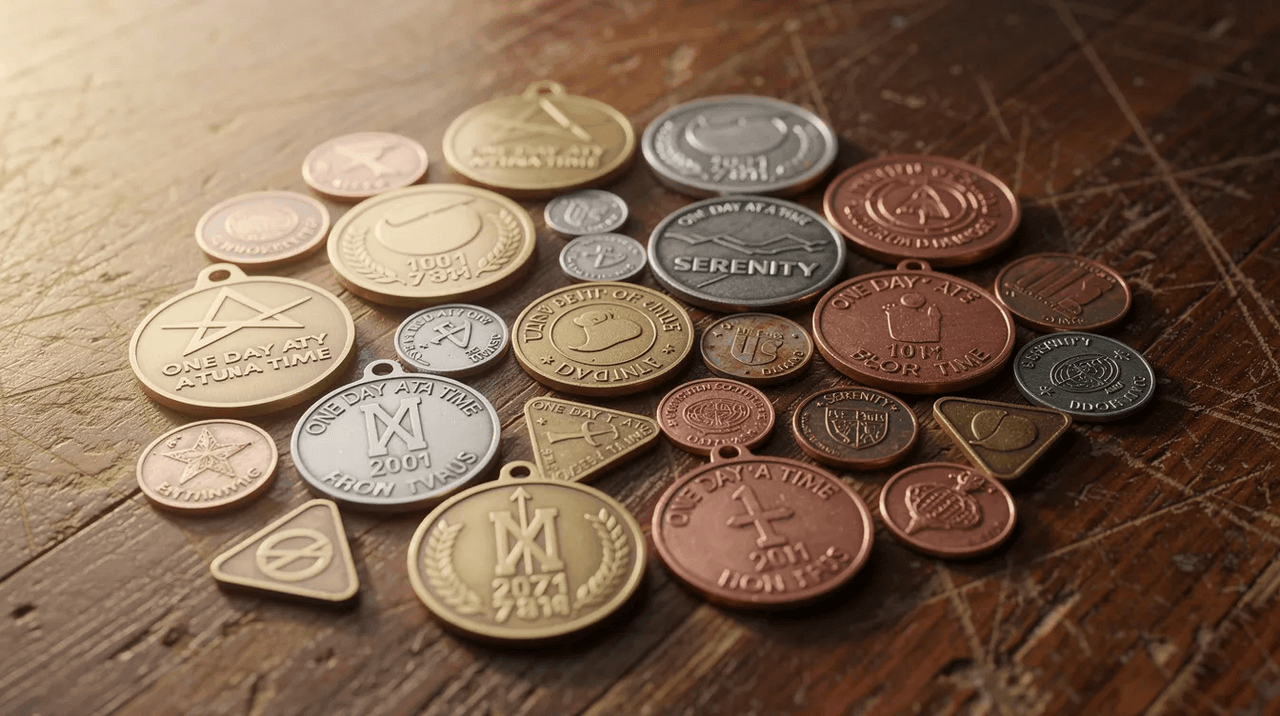
5. Sobriety Chips and Medallions
Sobriety chips mark milestones from 24 hours to multiple years of staying sober. These physical tokens are handed out at meetings and celebrations, creating some of the most emotionally charged moments in the recovery community.
Why It Stands Out
Unlike abstract symbols, chips are tangible. You can hold one during cravings, carry it in your pocket, or display it at home. Specific dates in recovery signify personal turning points and new beginnings – many chips feature roman numerals or engraved dates marking the exact day sobriety began.
Best For
People who benefit from physical milestone markers, accountability tools, and concrete measures of progress.
Key Strengths
- Mark specific sobriety milestones creating a sense of achievement
- Provide accountability and motivation throughout the journey
- Can be carried as daily reminders of how far you’ve come
Possible Limitations
- Risk of loss or damage to important milestone markers
- May create pressure around time-based recovery measures rather than quality of healing
6. The Infinity Symbol
The infinity symbol represents the ongoing journey of recovery. It signifies the continuous nature of healing and personal growth – a quiet acknowledgment that recovery is not a linear process with a finish line.
Why It Stands Out
This sobriety symbol emphasizes that recovery has no definitive endpoint. The infinity symbol represents ongoing growth in recovery, offering a perspective that removes the pressure of “being done” and replaces it with acceptance of continuous change.
Best For
Those who view recovery as a lifelong path and want a clean, simple symbol that works in many contexts.
Key Strengths
- Represents endless hope and perseverance
- Simple design versatile for jewelry, tattoos, or artwork
- It encourages perseverance through ongoing mental health challenges and substance use recovery
Possible Limitations
- May feel overwhelming to those in early recovery who need short-term goals
- Less specific to addiction recovery than other common symbols
7. The Butterfly
The butterfly symbolizes personal transformation and the beauty of change. The metamorphosis from caterpillar to butterfly mirrors the process of shedding old patterns, entering a vulnerable cocoon period, and emerging into freedom and new life.

Why It Stands Out
Unlike the phoenix’s dramatic rebirth from destruction, the butterfly represents gradual, natural transformation – which reflects how many people actually experience recovery.
Best For
People celebrating new beginnings, creating a fresh chapter, and embracing personal transformation.
Key Strengths
- Symbolizes complete life transformation and freedom from drugs and alcohol
- Beautiful, uplifting imagery that resonates across ages and backgrounds
- Represents growth through distinct life stages
Possible Limitations
- May feel too delicate for some personal preferences or feelings about recovery
- Common usage in many contexts may reduce uniqueness
Quick Comparison of the Best Sobriety Symbols
Common symbols of sobriety act as milestones, reminders of strength, and tools for connection. Here’s how they compare:
Symbol
Best For
Style
Display Options
AA Triangle & Circle
Traditional 12-step participants
Classic, communal
Chips, literature, meeting spaces
Semicolon
Subtle modern recovery
Minimal, discrete
Tattoos, jewelry, digital
Phoenix
Dramatic transformation
Bold, striking
Artwork, tattoos, logos
Lotus Flower
Spiritual growth themes
Elegant, natural
Jewelry, art, meditation spaces
Sobriety Chips
Milestone tracking
Tangible, tactile
Carried daily, displayed at home
Infinity Symbol
Ongoing journey focus
Clean, simple
Jewelry, tattoos, decor
Butterfly
New life celebration
Light, uplifting
Tattoos, art, jewelry
Symbols can foster a sense of community in recovery – when you see someone else wearing the same symbol, there’s an instant, unspoken connection that cuts through isolation.
How to Choose the Right Sobriety Symbol
Choose Based on Recovery Philosophy
If you’re in a 12-step program, the AA triangle and circle or sobriety chips may feel like home. If you prefer secular or alternative approaches, the lotus flower, phoenix, or infinity symbol may carry more personal meaning. Let your own symbol emerge from your beliefs – not someone else’s expectations.
Choose Based on Personal Style
Some people want bold imagery that tells their story to the world. Others want something only they understand. The semicolon works for quiet, private reminders. The phoenix works for those who want their emotions, feelings, and transformation visible.
Choose Based on Display Method
Tattoos demand different considerations than jewelry or artwork. A detailed phoenix may require significant space, while a semicolon or infinity symbol fits almost anywhere. Consider how your symbol will show up in your daily life and whether it matters that loved ones or strangers can see it.
Which Sobriety Symbol Is Best for You?
Individuals using symbols are more likely to maintain sobriety when the symbol genuinely resonates. Here’s a quick guide:
- Choose the AA Triangle and Circle if you value traditional recovery community connection and the balance of unity, recovery, and service
- Choose the Semicolon if you prefer subtle, meaningful reminders that your story continues
- Choose the Phoenix if you want to celebrate dramatic life transformation and rebirth
- Choose Sobriety Chips if you benefit from tangible milestone tracking and concrete progress markers
- Choose the Lotus if peace, healing, and gradual growth define your path
- Choose the Infinity Symbol if you see recovery as an ongoing, evolving process
- Choose the Butterfly if new life and freedom from substance abuse define your motivation
Final Thoughts
The best sobriety symbol is the one that keeps you grounded when recovery gets hard. No matter which symbol you choose, remember that symbols remind us of who we’re becoming – not just who we were. They’re tools for support, not requirements for success. Recovery remains deeply personal, and your symbol should reflect your mental well being, your values, and your vision for a fulfilling life.
Symbols help bridge gaps between mental health and addiction recovery, offering hope and connection across different paths. But symbols work best alongside professional support. At Huntington Beach Mental Health, we treat the anxiety, depression, and trauma that often come with recovery by secure video, with insurance-friendly options. We can also help you find a program that treats substance use directly. Whether you carry a chip, wear a semicolon, or ink a phoenix, professional guidance complements the powerful reminder that every symbol provides.
Your recovery is your own. Your symbol should be too.