

Online CBT for OCD in Virtual Sessions: Effective Virtual Therapy for OCD Treatment
Virtual Cognitive Behavioral Therapy (CBT) for Obsessive-Compulsive Disorder (OCD) delivers structured, evidence-based treatment remotely by combining cognitive strategies with Exposure and Response Prevention (ERP) to reduce obsessions and compulsions. This article explains how online CBT and ERP work, summarizes recent research on telehealth effectiveness, and outlines practical expectations for virtual sessions so you can decide whether this modality fits your needs. Many people face barriers to in-person care—travel, scheduling, stigma—and virtual therapy removes geographic limits while enabling therapist-guided, home-based exposures that target real-world triggers.
Below we define CBT for OCD, review clinical evidence comparing virtual and face-to-face formats, list practical benefits for Orange County residents, describe session structure and homework, discuss suitability and cost considerations, and explain how Huntington Beach Mental Health supports patients seeking virtual CBT for OCD. If you want clear, research-backed guidance about online ERP, this guide maps the pathway from assessment to treatment and helps you evaluate next steps toward recovery.
What Is Cognitive Behavioral Therapy for OCD?
Cognitive Behavioral Therapy (CBT) for OCD is a structured psychotherapy that reduces intrusive thoughts and ritual behaviors by changing thinking patterns and through behavioral experiments that weaken compulsive responses. The core mechanism combines cognitive strategies—identifying and reframing unhelpful beliefs—with behavioral techniques that systematically expose a person to feared situations while preventing the ritualized response, producing habituation and learning. This clinical approach targets the cycle of obsession and compulsion, teaching skills to tolerate uncertainty and reduce avoidance, which leads to measurable symptom reduction over weeks to months. Below we outline how CBT components function in OCD treatment and why ERP is central to durable change.
How Does CBT Help Treat Obsessive-Compulsive Disorder?
CBT helps treat OCD by combining cognitive restructuring to challenge maladaptive appraisals of intrusive thoughts with behavioral experiments that test and disconfirm catastrophic predictions. Clinicians guide patients to identify thinking errors—such as overestimation of risk or inflated responsibility—and use evidence-based techniques to reframe those beliefs, reducing anxiety that drives compulsions. Behavioral experiments, including graded exposures, allow patients to safely confront feared stimuli and observe that anxiety diminishes without performing rituals, reinforcing new learning. This coordinated cognitive-behavioral approach builds resilience and reduces OCD symptoms by creating alternative, adaptive responses to intrusive thoughts.
What Is Exposure and Response Prevention Therapy?
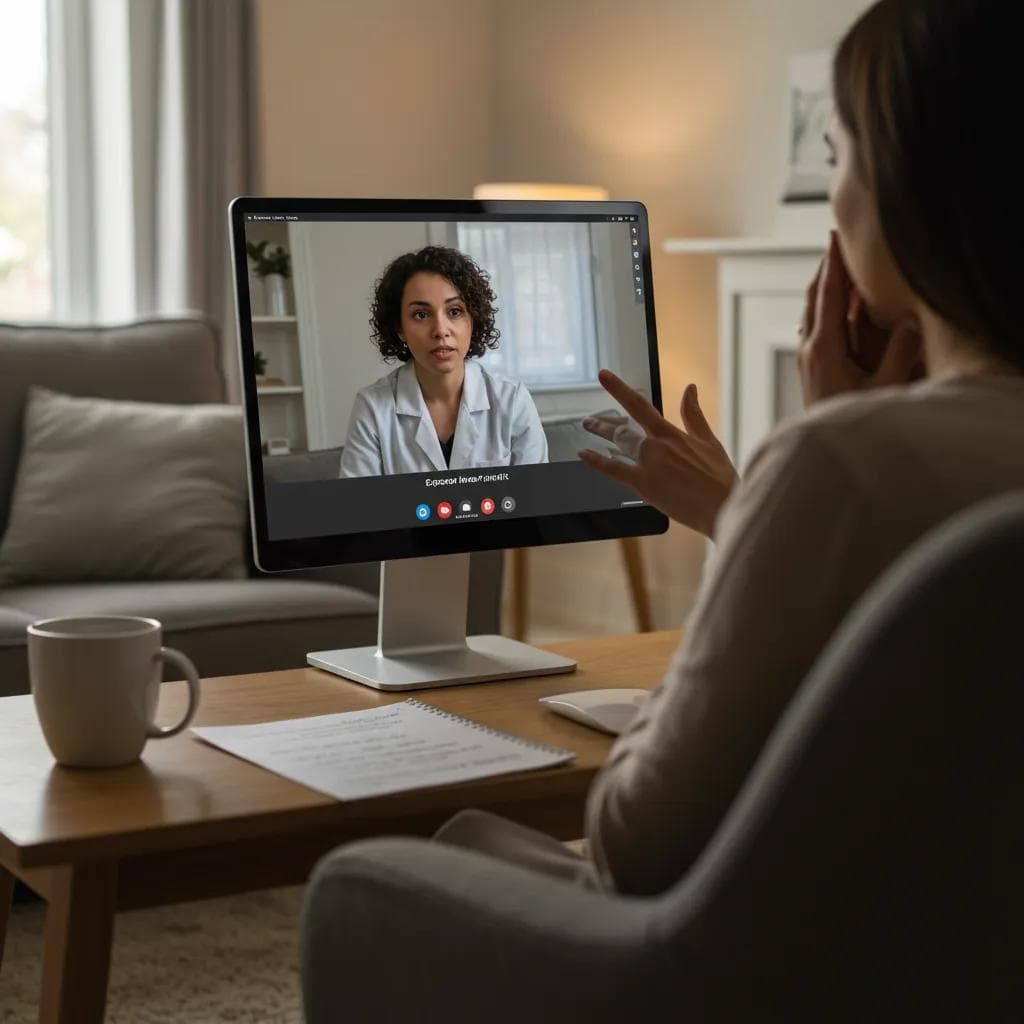
Exposure and Response Prevention (ERP) is the behavioral core of CBT for OCD, involving a planned progression of exposures to feared thoughts, images, or situations while actively preventing the usual compulsive responses. ERP begins with building an exposure hierarchy—ranking triggers by intensity—and then practicing repeated, controlled exposures that allow anxiety to decrease naturally without ritualizing. Therapists coach in-session and assign structured homework to generalize gains, tracking progress with symptom ratings and adjusting intensity as tolerance improves. Over time, ERP reduces the cycle of avoidance and compulsion, producing durable clinical improvement and measurable reductions in distress and ritual frequency.
Why Is ERP Important in Virtual OCD Therapy?
ERP translates effectively to virtual care because exposures can occur in the patient’s daily environment, offering realistic stimuli and opportunities for therapist-guided coaching via video. Conducting ERP remotely allows clinicians to observe real-world contexts, tailor exposures to actual triggers at home, and support safety planning while preventing responses in vivo. Virtual ERP preserves fidelity through structured session agendas, live coaching, and standardized outcome tracking, while also enabling rapid iteration of exposure tasks between sessions. These advantages make ERP a practical and potent component of virtual OCD treatment when paired with clear protocols and clinician oversight.
How Effective Is Virtual CBT for OCD Compared to In-Person Therapy?
Virtual CBT for OCD has been evaluated in recent studies that indicate telehealth-delivered CBT and ERP produce outcomes comparable to face-to-face treatment for many patients, with similar reductions in symptom severity and functional improvement. Current research shows remote ERP via video conferencing yields clinically meaningful improvement across diverse age groups, and effect sizes in several trials approximate those reported in in-person trials, supporting teletherapy as a valid option. Limitations exist—such as reduced suitability for severe comorbidities or immediate crisis risks—but for most patients virtual CBT offers effective, accessible care. After summarizing the evidence, the next section describes how local providers bridge research to care and how Huntington Beach Mental Health supports virtual appointment availability for those ready to pursue evidence-based CBT/ERP remotely.
Videoconferencing-Based ERP for OCD During COVID-19 Pandemic
>
BACKGROUNDThe existing literature indicates that psychotherapeutic treatment, especially exposure and response prevention (ERP) is efficacious in treating obsessive-compulsive disorder (OCD). The coronavirus disease 2019 pandemic adversely impacted many patients with OCD and disrupted their usual treatment. Moreover, the pandemic forced a global switch to telemental health (TMH) services to maintain the standards and continuity of care. Consequently, clinicians are increasingly using TMH-based psychotherapeutic treatments to treat OCD. However, several challenges have made it difficult for them to implement these treatments in the changed circumstances imposed by the pandemic.AIMTo describe the formulation, implementation, feasibility, and usefulness of videoconferencing-based ERP (VC-ERP) treatment for OCD during the coronavirus disease 2019 pandemic. Development of a protocol for videoconferencing-based exposure and response prevention treatment of obsessive-compulsive disorder during the COVID-19 …, S Kathiravan, 2023
What Does Recent Research Say About Virtual OCD Therapy?
Recent studies (2022–2025) report that video-delivered ERP and CBT reduce OCD symptoms substantially, with many trials documenting large within-group symptom reductions and comparable remission rates to in-person care. Research samples include adolescents and adults treated via structured teletherapy protocols, showing maintained gains at follow-up and high acceptability among participants. These findings suggest that, when delivered with trained clinicians and standardized protocols, virtual ERP achieves outcomes consistent with clinical guidelines. Understanding the research anchors confidence in teletherapy while recognizing that clinician judgment guides modality choice for complex cases.
How Do Virtual Sessions Achieve Symptom Reduction?
Virtual sessions achieve symptom reduction through a predictable therapeutic sequence: assessment, hierarchy-building, graded exposures, live response prevention coaching, and between-session homework that reinforces learning. Therapists use video to guide exposures in the patient’s actual environment, provide immediate feedback, and model coping strategies that reduce reassurance-seeking and ritualizing. Regular symptom tracking and session-by-session adjustments maintain progress and accountability, while structured homework consolidates gains outside sessions. This process leverages naturalistic exposure opportunities and consistent therapist support to accelerate tolerance and reduce compulsive behaviors.
Are Virtual CBT and ERP as Clinically Effective as Face-to-Face Treatment?
Yes, for many patients virtual CBT and ERP are clinically equivalent to face-to-face treatment, producing similar symptom reductions and functional gains when delivered by trained clinicians using evidence-based protocols. That equivalence holds particularly for patients without severe medical or psychiatric comorbidities and when technology and privacy are adequate. In-person care may be preferable for high-risk situations, intensive symptom presentations, or when hands-on assessment is necessary, and clinicians use clinical judgment to recommend the optimal format. Choosing modality depends on safety, symptom severity, and the practicality of conducting exposures in the patient’s environment.
What Are the Benefits of Choosing Virtual OCD Therapy?
Virtual OCD therapy delivers practical benefits that increase access and adherence while preserving clinical rigor, including reduced travel time, greater scheduling flexibility, and the ability to perform exposures in the patient’s natural environment. These advantages often improve treatment engagement and make specialized ERP-trained clinicians accessible across geographic boundaries, which matters for residents of Orange County and surrounding areas. Virtual care also supports families and caregivers by allowing joint sessions or consultations without logistical burdens, enhancing support around exposures and treatment planning. The following table summarizes key benefits with concrete examples to help you weigh virtual therapy’s advantages.
Benefit Category
Characteristic
Example/Value
Accessibility
Commute time
No commute; attend sessions from home
Flexibility
Scheduling
Evening or midday sessions easier to arrange
Naturalistic exposure
Real-world triggers
Exposures use the patient’s actual environment
Specialist access
Geographic reach
Access ERP-trained clinicians beyond local clinics
How Does Virtual Therapy Improve Accessibility in Orange County?
Virtual therapy reduces geographic and logistic barriers for Huntington Beach and Orange County residents by eliminating commute time, expanding appointment windows, and connecting patients with ERP-trained clinicians who may not be locally available. For families and working adults, remote sessions mean fewer missed work or school hours and easier coordination of caregiver involvement when needed. Teletherapy also helps people with mobility limitations or transportation challenges access specialized care without relocating or long drives. These accessibility advantages increase the likelihood of consistent attendance and better treatment outcomes.
Telemental Health for OCD: A Feasible Substitute for In-Person CBT
>
In general, telemental health interventions increase access to treatment and can be promising for patients with certain conditions. This systematic review contributes to the expanding literature indicating that delivering CBT through telemental health methods, particularly videoconference-based approaches, is a feasible substitute for in-person treatments. Investigating the effectiveness of using a telemental health approach to manage obsessive-compulsive disorder: a systematic review, Z Karbasi, 2024
What Comfort and Flexibility Does Online OCD Treatment Offer?
Online OCD treatment provides emotional comfort by allowing patients to work from familiar surroundings, which can lower baseline anxiety and make exposures less intimidating while still effective. Scheduling flexibility helps patients maintain treatment during life transitions—such as school terms or work projects—supporting continuity that is crucial for ERP’s cumulative effects. Home-based sessions can also foster privacy and discretion, reducing stigma-related barriers to starting therapy. Collectively, comfort and flexibility improve engagement and make sustained ERP practice more feasible for many patients.
How Does Virtual Therapy Support Specialized OCD Care?
Virtual therapy supports specialized OCD care by enabling clinicians trained in CBT and ERP to deliver structured protocols with fidelity through video coaching, standardized assessments, and outcome tracking tools. Remote formats allow clinicians to observe how symptoms present in daily contexts and to tailor exposures accordingly, preserving therapeutic precision. Technology tools—secure video, digital worksheets, and remote symptom measures—help maintain treatment quality and measurement-based care. This combination ensures specialized ERP remains available and effective even when delivered at a distance.
What Can You Expect During Virtual CBT Sessions for OCD?
A typical virtual CBT pathway includes an initial intake and assessment, collaborative treatment planning with an exposure hierarchy, regular sessions focusing on ERP and cognitive skills, and structured homework with remote monitoring and feedback. Sessions emphasize live coaching during exposures, progress measurement, and iterative adjustments to the plan based on symptom tracking. Telehealth logistics such as platform setup, privacy checks, and safety planning are integrated into the assessment to ensure secure and effective treatment.
The table below outlines core session components, how they translate to virtual delivery, and the clinical purpose of each element.
Session Element
How It’s Done Virtually
Purpose / Benefit
Initial assessment
Video clinical interview, standardized symptom measures
Establish diagnosis, severity, and safety plan
Exposure exercises
Live coached tasks in home environment via video
Real-world habituation and skill rehearsal
Cognitive work
Structured reframing and thought records shared digitally
Change maladaptive beliefs driving rituals
Homework assignment
Digital worksheets, recorded practice, secure messaging
Promote between-session practice and tracking
How Is the Initial Assessment Conducted Online?
The initial virtual assessment typically includes a comprehensive clinical interview conducted over video, standardized symptom rating tools administered remotely, and collaborative safety and crisis planning adapted for telehealth. Clinicians review the history of obsessions and compulsions, functional impact, and previous treatments while verifying a safe, private space for sessions and emergency contacts if needed. Technology checks—ensuring reliable video and audio—are performed and informed consent for teletherapy is documented. This assessment sets the stage for a tailored ERP plan and clear expectations for virtual work.
What Does a Typical Virtual CBT Session Include?
A typical 50-minute virtual CBT session follows a predictable agenda: brief symptom check-in, review of homework, guided ERP or cognitive exercises, and planning for between-session practice. During exposure segments, the therapist coaches in real time via video, prompts response prevention, and helps the patient notice anxiety decline without rituals. Cognitive techniques are practiced using shared digital tools, and session notes with homework tasks are provided electronically. This consistent structure promotes momentum and accountability across treatment.
How Is Homework and Therapist Guidance Managed Remotely?
Therapists assign homework using secure digital worksheets, exposure logs, or video-recorded practice (with consent) and review progress in subsequent sessions to reinforce learning and troubleshoot barriers. Remote messaging or portal systems may be used for brief clarifications and to maintain engagement between sessions, while standardized symptom scales track progress over time. Therapists provide frequent, specific feedback and adapt homework difficulty based on observed performance and reported anxiety levels. This systematic homework management ensures exposure practice generalizes to daily life and accelerates symptom reduction.
Is Virtual CBT for OCD Right for You?
Virtual CBT for OCD is an appropriate option for many individuals—especially those who are motivated, have reliable internet access, and whose exposures can be conducted safely at home—but it may be less suitable when severe comorbidities, high acute risk, or lack of a private space exist. Decision-making balances clinical factors (severity, comorbidity, safety), practical considerations (technology, environment), and personal preference, and clinicians can help determine the best modality. Below is a concise checklist to help you self-assess suitability and prepare for a clinician consultation about virtual care.
If you are considering teletherapy, use this checklist to assess basic suitability before scheduling an assessment.
- You have a private, quiet space and reliable internet for sessions.
- You can commit to regular sessions and between-session practice.
- Your exposures can be performed safely in your home or nearby environment.
- You do not have unmanaged severe psychiatric symptoms or acute safety risks that require in-person monitoring.
This self-assessment helps identify likely candidates for virtual CBT, and clinical evaluation determines final recommendations.
Who Are Ideal Candidates for Online OCD Therapy?
Ideal candidates for online OCD therapy are motivated individuals with access to a private space and stable internet, whose OCD triggers can be safely addressed in the home or local environment. Teens, working adults, caregivers, and people with transportation barriers often benefit from teletherapy’s flexibility and reduced logistical burden. Patients with moderate symptom severity and minimal acute safety concerns typically respond well to virtual ERP when engaged in structured practice. Clinicians evaluate readiness, safety, and environmental factors during the intake to confirm suitability.
Internet-Delivered CBT for Young People with OCD: Addressing Accessibility
>
Background:The development and evaluation of Internet-delivered cognitive behavioral therapy (iCBT) interventions provides a potential solution for current limitations in the acceptability, availability, and accessibility of mental health care for young people with obsessive-compulsive disorder (OCD). Preliminary results support the effectiveness of therapist-assisted iCBT for young people with OCD; however, no previous studies have examined the effectiveness of completely self-guided iCBT for OCD in young people. Online obsessive-compulsive disorder treatment: preliminary results of the “OCD? Not Me!” self-guided internet-based cognitive behavioral therapy program …, CS Rees, 2016
What Considerations Should You Keep in Mind Before Starting Virtual CBT?
Before starting virtual CBT, consider privacy (a closed room and headphones), technology reliability (backup device or phone), a safety and crisis plan agreed with the clinician, and insurance or payment logistics. Family or roommate involvement should be planned if exposures require support or if confidentiality may be compromised. Discussing expectations for homework commitment and session structure with the therapist helps prevent misunderstandings and maximizes the benefit of ERP. Addressing these considerations proactively smooths the treatment process and supports steady progress.
How Much Does Online OCD Therapy Cost and Is It Covered by Insurance?
Costs for online OCD therapy vary by clinician, service model, and intensity, with common pricing structures including per-session fees, package rates, and intensive options; many major insurers provide some telehealth coverage, though specifics differ by plan and region. Huntington Beach Mental Health offers assistance with benefits verification and payment guidance to help prospective clients understand their coverage and out-of-pocket costs. The table below summarizes typical service types, cost ranges commonly seen in the industry, and insurance/payment notes to guide realistic expectations before contacting a provider for a personalized estimate.
Below is a pricing and coverage comparison that illustrates typical service types, common cost ranges, and insurance considerations.
Service Type
Typical Cost Range
Insurance / Payment Notes
Standard weekly CBT/ERP session
Industry ranges vary; contact provider for exact rates
Many insurers cover telehealth sessions; verification required
Package or block sessions
Cost per session may be lower when pre-purchased
Packages may reduce out-of-pocket costs; check coverage
Intensive ERP programs
Higher up-front cost due to frequency
Insurance coverage varies; pre-authorization may be needed
What Are Typical Pricing Options for Virtual CBT and ERP?
Typical pricing options include pay-per-session rates, multi-session packages that lower per-session cost, and intensive formats that bundle frequent sessions into a short timeframe; exact figures vary across practices and regions. Virtual delivery can offer cost efficiencies—reduced overhead and travel—potentially translating to more flexible payment options or bundled programs. Because pricing is variable, clinicians commonly provide a benefits verification or cost estimate before starting treatment. For a precise quote, arrange a verification with the provider’s administrative team.
Which Insurance Plans Cover Virtual OCD Treatment?
Many major insurers and employer-based plans have expanded telehealth coverage in recent years, and Medicaid/Medicare policies may include teletherapy with specific rules; however, coverage varies by plan, state regulations, and provider network participation. Patients should check their individual benefits to confirm whether licensed therapists’ virtual sessions and ERP services are included and whether pre-authorization or in-network providers are required. Providers often assist patients by initiating a benefits check during intake to clarify coverage, copays, and any prior authorization steps. Verifying benefits early prevents surprises and informs treatment planning.
How Can Huntington Beach Mental Health Assist with Insurance and Payment?
Huntington Beach Mental Health can support prospective patients by conducting benefits verification, explaining common payment options, and advising on administrative steps needed to begin virtual care while preserving confidentiality and respect for patient circumstances. Administrative assistance typically includes coordinating verification of telehealth benefits, outlining likely out-of-pocket expenses, and discussing payment pathways that fit individual needs. To start this process, prospective patients are encouraged to contact Huntington Beach Mental Health through their listed website or Google Business Profile to initiate an intake and benefits check. This support helps translate clinical recommendations into achievable care plans.
Why Choose Huntington Beach Mental Health for Virtual CBT for OCD?
Huntington Beach Mental Health offers compassionate, evidence-based mental health services and treats OCD with CBT and ERP delivered by licensed clinicians who specialize in structured, individualized therapy. As a virtual practice serving Orange County, the organization connects patients to evidence-based care and supports remote treatment needs. Their approach emphasizes individualized treatment plans, measurement-based progress tracking, and practical assistance with telehealth logistics and insurance verification. If you seek local, evidence-based virtual CBT for OCD, Huntington Beach Mental Health provides a clear pathway to begin assessment and remote therapy.
What Makes Our Virtual OCD Therapy Compassionate and Individualized?
The program emphasizes individualized treatment planning, tailoring ERP hierarchies and cognitive work to each person’s unique triggers, values, and daily routines while maintaining a compassionate, empowering therapeutic stance. Clinicians collaborate with patients to set achievable goals, pace exposures appropriately, and involve family or caregivers when helpful for support. This patient-centered focus fosters trust and adherence, enabling steady progress and resilience-building. The result is care that blends clinical rigor with empathetic support to maximize engagement in remote ERP work.
Who Are Our Licensed Therapists Specializing in Virtual OCD Treatment?
Licensed clinicians at Huntington Beach Mental Health provide virtual CBT and ERP, bringing training in evidence-based OCD treatments and experience delivering telehealth interventions while adhering to professional practice standards. Therapists focus on maintaining fidelity to CBT and ERP protocols in the virtual setting, using structured assessments and outcome measures to guide treatment decisions. This clinician expertise ensures patients receive standardized, effective interventions adapted to remote delivery. Prospective patients can discuss therapist qualifications during the intake process.
How Can You Start Your Virtual OCD Treatment Journey Today?
To begin virtual OCD treatment, take three practical steps: contact Huntington Beach Mental Health through their website or Google Business Profile to express interest in virtual services, complete an intake that includes benefits verification and a clinical assessment, and schedule an initial virtual assessment to develop a treatment plan. The intake will cover telehealth consent, privacy considerations, and technology setup to ensure safe and effective sessions. This straightforward pathway moves from inquiry to assessment to active ERP treatment while providing administrative support for insurance and scheduling.
What Are the Most Common Questions About Virtual CBT for OCD?
This final section answers common practical questions about virtual CBT and ERP in concise, actionable terms so readers can quickly find focused guidance and next steps. The answers below summarize effectiveness, medication considerations, ERP mechanics, comparative benefits, and cost expectations with direct recommendations for further evaluation by a clinician. If you want personalized guidance after reviewing these answers, Huntington Beach Mental Health can assist with intake and benefits verification to facilitate starting virtual therapy.
Is Virtual CBT Effective for OCD?
Yes—current research indicates virtual CBT and ERP are effective for many people with OCD, producing symptom reductions comparable to in-person treatment when delivered by trained clinicians using structured protocols. Trials from recent years show clinically meaningful improvements across adolescents and adults treated via teletherapy, with good acceptability and maintained gains at follow-up. Individual suitability depends on severity, comorbidity, and safety risks, which clinicians assess during intake. For personalized evaluation, consult a licensed therapist to determine if remote CBT is appropriate for your circumstances.
Can OCD Be Treated Without Medication Online?
CBT with ERP can be effective without medication for many individuals with OCD, particularly those with moderate symptoms who engage consistently in exposures and cognitive work. Medication may be recommended in conjunction with therapy for severe cases or when depressive or anxiety comorbidities complicate progress, and combined approaches can be collaboratively managed by clinicians. A clinical assessment determines whether therapy alone, medication, or a combination is most likely to produce optimal outcomes. Discuss options with a treating clinician to create a personalized plan.
How Does Online ERP Therapy Work?
Online ERP therapy follows a stepwise process: assessment, hierarchy development, graded exposures with response prevention, homework practice, and progress monitoring, all adapted to the virtual format with live therapist coaching. The therapist guides exposures via video, helps the patient resist rituals, and assigns between-session practice to consolidate learning. Regular symptom measures track improvement and inform treatment adjustments. This structure keeps therapy focused, measurable, and goal-directed.
What Are the Benefits of Virtual OCD Therapy Over In-Person?
Virtual OCD therapy offers several advantages over in-person care, including convenience, the ability to conduct exposures in real-world home settings, broader access to specialized clinicians, and flexible scheduling that reduces barriers to consistent attendance. These benefits often support higher engagement and make it easier to integrate ERP practice into daily life. For many patients, teletherapy enhances practicality without sacrificing therapeutic rigor. Understanding these benefits helps patients choose the modality that best fits their needs.
How Much Does Online OCD Therapy Cost?
- Key next steps: Prepare a private space for sessions, gather insurance information, and identify your primary treatment goals.
- Scheduling tip: Ask about session frequency and expected homework load during intake to align therapy with daily responsibilities.
- Engagement reminder: Consistent between-session practice is the primary driver of symptom change in ERP.
This set of practical answers and action steps equips readers to decide whether virtual CBT for OCD is a viable path and how to begin the process with local support.