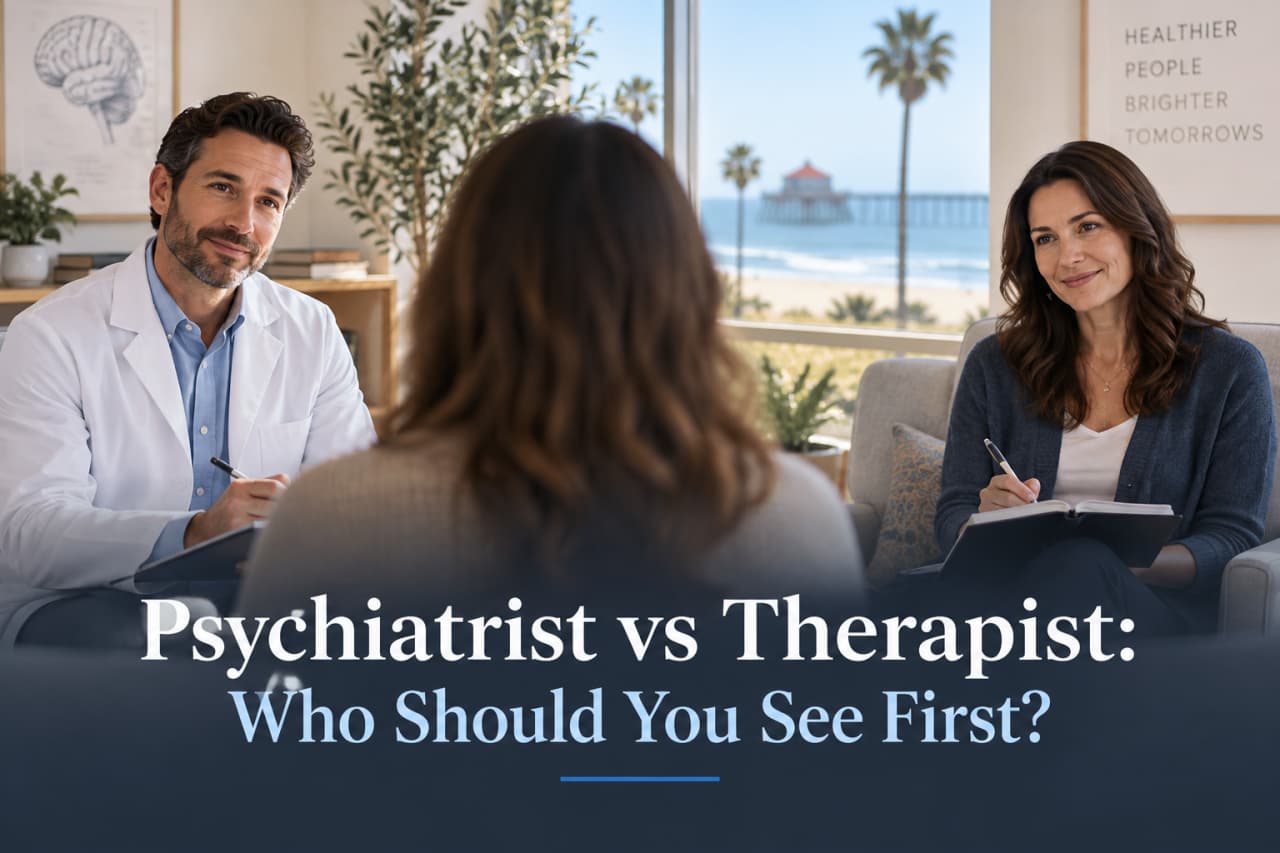

Holistic Approaches to Mental Health Treatment in Huntington Beach: Comprehensive Mind-Body-Spirit Wellness Solutions
Holistic mental health treatment integrates mind, body, and spirit to address psychological symptoms while strengthening daily functioning and resilience for adults and families in Huntington Beach. This article explains what a holistic approach means, why integrating psychotherapy, lifestyle medicine, and somatic practices improves outcomes, and how local implementation supports recovery.
Many people in Orange County seek alternatives to single-modality care because complex conditions often benefit from coordinated interventions that include psychotherapy, medication when appropriate, and complementary therapies. Here we map evidence-backed mind-body therapies, explain integrative psychiatry workflows, survey alternative modalities like nutritional psychology and neurofeedback, and outline family and community supports that bolster recovery. You will find comparative tables for therapy characteristics, lists of practical exercises and starting steps, and clear guidance on how to access local services. Throughout, we reference current research and practical frameworks so readers can match condition severity and personal preference to effective holistic mental health options in Huntington Beach.
What Is a Holistic Approach to Mental Health Treatment in Huntington Beach?
A holistic approach to mental health treats psychological symptoms while simultaneously addressing physical health, lifestyle, and meaning or spiritual dimensions to produce broader functioning gains. Mechanistically, holistic models combine psychotherapy, behavioral interventions, and body-based therapies to regulate the nervous system and modify cognitive-emotional patterns, which reduces symptom burden and improves daily resilience. For Huntington Beach residents, this means care pathways that consider work, family, sleep routines, nutrition, and community supports alongside clinical interventions to create sustainable recovery goals. The following subsections unpack integration mechanisms, common conditions suited to holistic care, and local reasons to choose person-centered holistic services in Orange County.
How Does Holistic Mental Health Integrate Mind, Body, and Spirit?
Holistic mental health integrates talk therapies, lifestyle medicine, and somatic practices to align cognitive processing, physiological regulation, and personal values for lasting change. Psychotherapy targets maladaptive thought patterns while movement, breathwork, and sleep hygiene modulate autonomic balance; together they reduce hyperarousal and depressive withdrawal. Spiritual or meaning-focused work addresses purpose, resilience, and connection, often delivered through values-based therapies or supportive counseling that enhance motivation and adherence. Understanding these interactive mechanisms leads naturally to consideration of which conditions respond best to integrated care and when to prioritize specific modalities.
What Conditions Are Treated with Holistic Mental Health Approaches?
Holistic approaches are applied across anxiety disorders, depressive disorders, PTSD, mood instability, ADHD, and many co-occurring conditions where lifestyle and body-based factors influence symptoms. The model is particularly suitable when symptoms are tied to sleep disruption, chronic stress, poor nutrition, or trauma-related somatic dysregulation because combined interventions address both drivers and manifestations of distress. Clinicians sequence therapies based on severity: psychotherapy and trauma-focused interventions for core pathology, somatic practices for regulation, and adjunctive medication when indicated. When assessing fit, providers balance evidence strength, patient preference, and accessibility to determine a practical, individualized plan.
Why Choose Holistic Mental Health Care in Huntington Beach?
Choosing holistic care in Huntington Beach offers compassionate, comprehensive attention to personal goals, functioning, and long-term resilience rather than solely targeting symptom reduction. Localized holistic programs emphasize culturally responsive care, coordinated multidisciplinary teams, and community resources that enhance continuity and accessibility for Orange County residents. Patients who pursue holistic pathways often report improved daily functioning, stronger social support, and tools for long-term relapse prevention compared with single-modality approaches. For those seeking local implementation, Huntington Beach Mental Health exemplifies a community provider model that offers comprehensive mental health services and individualized treatment plans to translate holistic principles into actionable care.
Which Mind-Body Therapies Are Effective for Mental Health in Huntington Beach?

Mind-body therapies such as mindfulness, meditation, and yoga reduce anxiety and depressive symptoms by improving attention control and autonomic regulation, producing reliable clinical benefits when integrated into a treatment plan. These therapies operate through attention training, emotion regulation skills, and nervous-system downregulation, which together reduce rumination and physiological reactivity. Clinicians often offer these modalities in individual or group formats, adapting session length and practice frequency to patient needs and functional goals. Below we summarize mechanisms, practical exercises, and how recreational activities support therapeutic engagement.
Holistic practitioners commonly use these core mind-body modalities:
- Mindfulness Practices: Attention training reduces rumination and increases present-moment regulation.
- Guided Meditation: Structured exercises improve emotion regulation and stress recovery.
- Yoga for Emotional Regulation: Movement-based practices balance sympathetic and parasympathetic activity.
These modalities form a foundation for home practice and clinic-based sessions and set up the next discussion on specific mechanisms for anxiety and depression.
Therapy
Mechanism
Typical Format
Mindfulness Meditation
Attention training and decentering
8–12-week group or individual sessions
Yoga (Trauma-informed)
Somatic regulation and breath-movement coupling
Group classes or one-on-one therapeutic yoga
Recreational Activities
Social engagement and experiential learning
Structured therapy groups and activity-based sessions
How Do Mindfulness and Meditation Reduce Anxiety and Depression?
Mindfulness and meditation teach attention regulation and non-reactivity, which diminish cognitive avoidance and automatic stress responses that sustain anxiety and depression. Neurobiologically, regular practice alters functional connectivity in networks related to self-referential processing and emotion regulation, improving top-down control of mood. Clinically, brief mindfulness interventions reduce symptom severity and complement psychotherapy by improving distress tolerance and relapse prevention. Two simple practices to try include a 5-minute breath-awareness exercise and a body-scan that cultivate interoceptive awareness and reduce rumination, preparing individuals for more intensive therapeutic work.
What Role Does Yoga Play in Emotional Regulation and Stress Relief?
Yoga uses coordinated breath, movement, and mindful attention to shift autonomic balance toward parasympathetic dominance, lowering physiological arousal linked to anxiety and hypervigilance. Therapeutic variants emphasize somatic tracking and gentle sequencing to rebuild interoceptive awareness disrupted by trauma or chronic stress. Evidence indicates yoga reduces depressive symptoms and improves sleep quality when used as adjunctive care, particularly in group settings that also foster social support. Integrating yoga into treatment plans offers a body-focused pathway to regulation that complements cognitive and behavioral interventions.
How Are Recreational and Therapeutic Activities Used in Holistic Care?
Recreational therapies—art, music, nature-based activities, and structured group outings—promote engagement, skill-building, and social connection while offering low-stigma pathways to practice coping skills. These activities target motivation, behavioral activation, and peer support mechanisms that commonly improve functional outcomes and reduce isolation. Programs may incorporate skill-building goals, graded exposure, and reflective processing to translate activity into therapeutic learning. Understanding these applications leads to how clinicians combine medication and holistic modalities for best outcomes.
How Does Integrative Psychiatry Combine Medication and Holistic Treatments?
Integrative psychiatry combines evidence-based pharmacotherapy with psychotherapy and complementary therapies to treat symptoms while addressing lifestyle and neurobiological contributors to illness. In this approach, psychiatric assessment identifies biologic, psychosocial, and lifestyle factors; medication management targets neurochemical dysregulation when needed; and complementary therapies support regulation, coping, and recovery. The clinical workflow typically follows assessment → collaborative plan → coordinated implementation → monitoring, ensuring medication is one component of a broader, personalized plan. Below is a concise breakdown of roles and benefits in an integrative model.
Component
Role
Benefit
Medication Management
Correct neurochemical imbalances and stabilize acute symptoms
Rapid symptom relief and support for therapeutic engagement
Psychotherapy
Address maladaptive cognition, trauma processing, and behavior change
Durable skill-building and relapse prevention
Complementary Therapies
Regulate autonomic functioning and support lifestyle change
Improved sleep, reduced stress, and enhanced functioning
What Is the Role of Medication Management in Holistic Mental Health?
Medication management within a holistic model serves to stabilize acute symptoms, enable engagement in psychotherapy, and correct biological contributors that impede recovery from anxiety, depression, or mood disorders. Providers use patient-centered decision-making to weigh risks and benefits, monitor side effects, and adjust dosing while coordinating lifestyle interventions and complementary therapies. Medication is positioned as a facilitator rather than a sole solution, and its effectiveness is enhanced when paired with behavioral activation, sleep optimization, and psychoeducation. Clear coordination between prescribers and therapists improves adherence and long-term outcomes.
How Does Integrative Psychiatry Address Complex Mental Health Conditions?
For complex or co-occurring conditions, integrative psychiatry sequences interventions using multidisciplinary teams that may include psychiatrists, psychotherapists, nutrition-focused clinicians, and somatic therapists to target intersecting contributors. Typical pathways involve thorough assessment, prioritized stabilization (often including medication management), parallel psychotherapeutic work, and iterative monitoring to refine the combined plan. This multimodal strategy reduces symptom burden more reliably than isolated treatments and supports functional recovery through coordinated care. The next section summarizes benefits of combining conventional and complementary approaches.
The complexities of mental health conditions often necessitate a coordinated approach that integrates various therapeutic modalities.
Integrative Collaborative Care for Complex Mental Health Needs
>
Many individuals with mental health problems have comorbid physical conditions, or may present with substance/alcohol misuse or abuse issues. This results in complex treatment challenges that may not be adequately addressed by a model of care that is solely delivered by an individual clinician using a sole intervention. Mainstream pharmacotherapeutic treatment of mental health problems often have limited effectiveness in completely resolving symptoms, and may cause adverse side effects. Adjunctive treatment approaches, including nutraceuticals, lifestyle and behaviour change interventions, are widely used to assist with treatment of mental health problems. However, whilst these can be generally safer with fewer side effects, they have varying levels of evidentiary support. These circumstances warrant reframing the current treatment approach towards a more evidence-based integrative model which may better address the real-world challenges of psychiatric disorders and comorbid physical conditions. In essence, this means developing an integrative model of care which embodies an evidence-informed, personalized stepwise approach using both conventional pharmacological treatments alongside novel adjunctive treatments (where applicable) via the application of a collaborative care approach.
>
An integrative collaborative care model for people with mental illness and physical comorbidities, C Ee, 2020
What Are the Benefits of Combining Conventional and Complementary Therapies?
Combining conventional and complementary therapies amplifies symptom reduction, addresses lifestyle contributors to relapse, and improves patient engagement through individualized choices. Evidence suggests integrated plans yield larger effect sizes for mood and anxiety symptoms than single-modality interventions in many pragmatic trials and meta-analyses. Patients often experience improved sleep, better stress tolerance, and more sustainable behavior change when medication, therapy, and mind-body practices are aligned. These advantages help explain why many providers now recommend blended care pathways for moderate-to-severe conditions.
What Alternative Therapies Support Mental Wellness in Huntington Beach?
Alternative therapies such as nutritional psychology, acupuncture, biofeedback, and neurofeedback address physiological and metabolic contributors to mood and anxiety by modulating gut-brain signaling, autonomic balance, and neuroplasticity. These modalities are often used as adjuncts to psychotherapy and medication, targeting specific symptom clusters like sleep disturbance, concentration problems, and chronic stress responses. Clinicians select therapies based on evidence strength, patient preference, and treatment goals to ensure complementary benefits without replacing core psychiatric care. The following table compares common alternative therapies and their practical implementation.
Introductory paragraph: This table outlines alternative modalities by primary benefit, typical course length, and a brief evidence summary so readers can compare options when considering adjunctive care in Huntington Beach.
Modality
Primary Benefit
Typical Course
Evidence Summary
Nutritional Psychology
Mood modulation via diet and gut-brain axis
8–12 sessions plus dietary plan
Growing evidence supports diet-mood links, especially for depression
Acupuncture
Reduction in anxiety and somatic symptoms
6–10 sessions
Moderate evidence for anxiety and stress reduction
Biofeedback / Neurofeedback
Autonomic and EEG regulation for anxiety and ADHD
10–30 sessions
Emerging evidence; stronger for some ADHD and anxiety protocols
How Can Nutritional Psychology Improve Mood and Mental Health?
Nutritional psychology explores how diet, micronutrients, and gut microbiota influence neurotransmitter systems and inflammatory pathways that modulate mood. Clinical interventions include targeted dietary adjustments, evidence-based supplementation when indicated, and behavioral strategies to stabilize eating patterns that affect sleep and energy. Recent studies emphasize Mediterranean-style diets, omega-3 supplementation, and attention to blood-sugar stability as practical supports for depression and anxiety management. Nutritional approaches are most effective when integrated with psychotherapy and lifestyle changes rather than used in isolation.
What Are the Benefits of Acupuncture, Biofeedback, and Neurofeedback?
Acupuncture can reduce somatic tension and anxiety through modulation of autonomic tone and endogenous opioids, while biofeedback trains physiological responses such as heart rate variability to improve stress resilience. Neurofeedback targets EEG patterns to enhance attention and self-regulation for conditions like ADHD and some anxiety presentations. Each therapy shows varying evidence strength—acupuncture and HRV biofeedback have moderate support for stress reduction, neurofeedback exhibits promising results for attention regulation—and all are best used as adjuncts within a coordinated plan. Understanding these mechanisms sets the stage for trauma-informed integrative methods.
How Does Trauma-Informed Holistic Care Enhance PTSD Recovery?
Trauma-informed holistic care centers safety, choice, and somatic regulation, combining psychotherapies such as EMDR or trauma-focused CBT with body-based approaches like somatic experiencing and breathwork to reduce reactivity and improve integration. This approach prioritizes pacing, stabilization skills, and titrated exposure to minimize retraumatization while building resources for processing traumatic memories. Research and clinical guidelines support trauma-informed frameworks for improving PTSD outcomes, particularly when somatic regulation precedes trauma processing. These methods enhance readiness for exposure-based therapies and support sustained recovery.
How Does Family and Community Support Enhance Holistic Mental Health Recovery?

Family and community supports extend therapeutic gains by altering relational dynamics, bolstering practical supports, and creating accountability structures that sustain behavioral change over time. Holistic family counseling addresses systems-level patterns, communication, and caregiving stressors that often perpetuate symptoms, while peer groups and community programs offer lived-experience validation and resilience-building opportunities. Cultural sensitivity ensures interventions respect values and language needs, which increases engagement and improves outcomes. The following subsections outline family counseling, peer supports, and cultural adaptations that optimize recovery.
What Is Holistic Family Counseling and Its Role in Mental Wellness?
Holistic family counseling uses a systems perspective to align family routines, communication patterns, and expectations with the patient’s recovery goals, addressing relational contributors to stress and relapse. Therapists work with families to set collaborative goals, teach emotion-coaching techniques, and support caregiver self-care to reduce burnout and improve treatment adherence. Anonymized clinical vignettes commonly illustrate how family changes in behavior reduce conflict, increase support, and accelerate patient engagement in therapeutic tasks. These systemic changes often make individual gains more sustainable by changing the daily context in which recovery occurs.
How Do Peer Support and Group Wellness Programs Foster Resilience?
Peer support and group wellness programs leverage shared experience, modeling, and mutual accountability to increase motivation, reduce isolation, and build adaptive coping skills. Groups may focus on skills training, recreational activities, or psychoeducation and typically follow structured schedules to build routine and social connection. Peer facilitators often bridge formal clinical care and community resources, helping members access services and practice new behaviors in a supportive setting. These social mechanisms complement individual therapy by translating skill learning into real-world interactions.
Why Is Cultural Sensitivity Important in Holistic Mental Health Care?
Cultural sensitivity ensures that assessment, treatment planning, and interventions align with a person’s values, beliefs, and language needs, which increases trust and treatment adherence. Practices include using culturally relevant examples, adapting mindfulness and spiritual practices to fit beliefs, and involving family or community leaders when appropriate. Providers who apply cultural competence reduce barriers to care and improve outcomes for diverse Orange County populations. Applying these principles supports more accessible, respectful holistic programming across community settings.
What Are the Benefits of Holistic Mental Health Programs in Orange County?
Holistic mental health programs in Orange County offer personalized treatment plans that integrate psychotherapy, medication when necessary, and complementary modalities to improve symptom reduction and functional recovery. These programs prioritize measurable goals, regular outcome monitoring, and coordination across disciplines to ensure interventions align with lifestyle, work, and family demands. Evidence supports integrated approaches for anxiety and depression when mindfulness, CBT, and lifestyle interventions are combined, producing larger and more durable improvements. Below we outline how personalized plans empower recovery, summarize supporting evidence, and describe a local implementation example.
How Do Personalized Treatment Plans Empower Patient Recovery?
Personalized treatment plans begin with a comprehensive assessment and set measurable goals that guide therapy selection, lifestyle interventions, and monitoring strategies to keep care responsive and patient-centered. Plans emphasize collaboration, with clinicians adjusting modalities—individual therapy, family counseling, group sessions, and adjunctive activities—based on progress and preferences. This empowerment approach increases engagement and responsibility for treatment tasks, improving adherence and outcomes. Clear goal-setting and routine reassessment create a feedback loop that supports sustained recovery.
What Evidence Supports Holistic Approaches for Anxiety and Depression?
Recent studies and meta-analyses through 2023–2025 indicate that combining psychotherapy (especially CBT), mindfulness-based interventions, and lifestyle modifications yields significant symptom reductions for anxiety and depression compared with single approaches. Research highlights that integrated programs improve relapse prevention, functional outcomes, and quality of life, with effect sizes often larger when interventions are synchronized rather than sequential. Clinicians use these findings to build multimodal packages tailored to individual risk profiles and treatment readiness.
The growing body of evidence underscores the effectiveness of holistic and integrated approaches in mental health care.
Holistic Mental Health: Beyond Traditional Models
>
Hegemonic psychiatric models in the 20thcentury, centered on the notion of disease, were willing to consider a single ’natural’ primary cause—either biochemical or neurophysiological–as sufficient explanation for complex psychological and social phenomena like psychosis or depression. The pharmacological treatment of mental health conditions came to be understood solely in terms of metabolic replenishment to fight a putative ’chemical imbalance’, however, without a true need to delve into the recesses of the patients’ minds and bodies.
>
These overly simplistic models collapsed in the past two decades, and the trend is now the opposite, towards the recognition that mental health conditions are to a large extent, a social construct produced by lifestyles that jeopardize the essential tenets of good health: sleep, nutrition, exercise, introspection, and mind-body connection. Although psychiatric drugs are widely prescribed as ’effective’ treatment, the number of people diagnosed with mental health conditions has increased substantially in the past decades. The World Health Organization (WHO) estimates that the prevalence of mental health conditions has risen from 416 million people in 1990 to over 615 million people in recent years . Similarly, the U.S. National Survey on Drug Use and Health has reported significant increases in rates of depression, anxiety, and suicidal ideation, particularly among young adults, over the past decade . A significant increase
>
It is time for more holistic practices in mental health, S Ribeiro, 2024
How Does Huntington Beach Mental Health Implement Holistic Wellness Programs?
Huntington Beach Mental Health implements holistic wellness by offering comprehensive mental health services and individualized treatment plans that draw from psychotherapy, medication management, psychoeducation, and recreational and therapeutic activities. Programs emphasize assessment-driven personalization, multidisciplinary coordination, and activities designed to build coping skills and community connection. For local residents seeking enrollment or consultation, Huntington Beach Mental Health provides intake pathways that start with a psychiatric assessment and proceed to tailored programming based on clinical needs and personal goals, supporting practical access to holistic care.
How Can You Start Your Holistic Mental Health Journey in Huntington Beach?
Starting a holistic mental health journey begins with a structured assessment that evaluates psychiatric symptoms, psychosocial context, lifestyle factors, and treatment goals to create an individualized plan. The initial process typically includes psychiatric assessment, collaborative goal-setting, and shared decision-making about therapy modalities, medication management if indicated, and complementary supports such as nutritional counseling or mind-body practices. Below is a starter checklist and guidance on choosing therapies and local service navigation to help readers take the first steps toward integrated care.
Steps to begin a holistic mental health plan:
- Complete a comprehensive assessment: Include psychiatric, medical, and lifestyle domains to inform treatment selection.
- Select evidence-based modalities: Match condition severity and patient preference to therapies such as CBT, mindfulness, or neurofeedback.
- Set measurable goals and monitoring: Establish concrete outcome measures and follow-up schedules.
What Should You Expect During a Holistic Mental Health Assessment?
During a holistic assessment expect structured questions about mood, anxiety, trauma history, sleep, diet, substance use, social supports, and functional goals to establish a multi-dimensional baseline. Clinicians use this information to design an individualized treatment plan that may include psychotherapy modalities, psychiatric assessment for medication management, and referrals to complementary services. Typical intake sessions last long enough to gather essential history and set immediate safety and stabilization goals while scheduling follow-up for deeper evaluation. Understanding this process helps you know which elements to prepare before your first appointment.
How Do You Choose the Right Holistic Therapy for Your Needs?
Choosing the right therapy depends on condition severity, evidence for specific modalities, personal preferences, access considerations, and prior treatment history. Use a decision framework: prioritize high-evidence therapies for core symptoms (e.g., CBT for anxiety and depression), add mind-body modalities for regulation, and consider adjunctive options like nutritional psychology or neurofeedback for persistent biological contributors. Ask providers about expected course length, measurable goals, and how therapies will be coordinated in a unified plan. These evaluation strategies support selecting services that fit your goals and lifestyle.
Where Can You Find Holistic Mental Health Services in Huntington Beach?
Local options include multidisciplinary clinics and providers who offer hybrid access (in-person and telehealth), trauma-informed programs, and coordinated services across psychotherapy, psychiatric assessment, and complementary therapies. For those who want an example of a local provider offering integrated care, Huntington Beach Mental Health provides comprehensive mental health services and psychiatric assessment as part of individualized treatment plans, and can be reached by phone for intake questions at 714-475-1617 or located through its Google Business Profile listing. When evaluating providers, prioritize credentials, treatment integration capabilities, telehealth availability, and whether the practice offers recreational and therapeutic activities and psychoeducation to support recovery.
- Check provider services: Ensure offerings include psychotherapy, medication management, and mind-body options.
- Confirm coordination: Ask how the team communicates across disciplines and measures progress.
- Evaluate accessibility: Consider telehealth, session schedules, and community program linkages.
These practical steps will help you find locally appropriate, evidence-informed holistic care.