

Virtual Mental Health Therapy in Orange County: What to Expect from Online Therapy Sessions
Virtual mental health therapy uses secure telehealth technology to deliver evidence-based mental health services—such as individual, group, and family therapy—remotely to clients in Orange County. This article explains how virtual therapy works, the clinical benefits and limitations, step-by-step expectations for sessions, the virtual services offered by Huntington Beach Mental Health, how to choose a qualified virtual therapist, and practical guidance on costs, insurance, and privacy.
Many people considering online counseling worry about logistics, confidentiality, and whether remote care is as effective as in-person treatment; this guide addresses those concerns with concrete steps, current research context, and local resources. Read on for a clear, actionable roadmap from first contact and technical setup through ongoing treatment planning and insurance verification, including specific ways Huntington Beach Mental Health supports virtual clients in Orange County. The sections below follow a logical journey—definition and process, benefits and evidence, session expectations, local services, choosing a therapist, and cost/privacy considerations—so you can move from understanding to confident enrollment.
What Is Virtual Mental Health Therapy and How Does It Work?
Virtual mental health therapy is the remote delivery of behavioral health services using secure video, phone, or messaging platforms that preserve clinical workflows while increasing access. The essential mechanism is the clinician–patient therapeutic relationship mediated by HIPAA-aligned telehealth platforms that allow assessment, intervention, and follow-up without requiring an in-person visit. Virtual therapy produces value by reducing travel and scheduling barriers, maintaining continuity of care during life transitions, and enabling flexible delivery of evidence-based modalities like CBT and DBT. Below is a concise operational flow that captures the typical patient journey and prepares readers for the practical steps that follow.
- Initial intake and clinical assessment to identify concerns and set goals.
- Scheduling and technical orientation to the chosen secure platform.
- Conducting structured video or phone sessions that mirror in-person treatment.
- Follow-up, homework, and progress review with ongoing adjustments to the plan.
This stepwise flow leads directly into the technical features and standards that support safe, reliable telehealth; understanding those platform features helps reduce first-session anxiety and improve engagement.
What Are the Key Features of Telehealth Mental Health Services?
Telehealth mental health services combine technical safeguards and therapeutic processes to replicate clinical quality online while offering extra accessibility benefits. Key technical features include secure, encrypted video sessions, authenticated patient portals for intake and messaging, and options for phone-only or text-based check-ins when video is not feasible. Service features include flexible scheduling, recorded session notes in the electronic health record, accommodations such as captioning or device compatibility, and clear emergency protocols for local crisis response. These platform and service components work together to protect privacy and support clinical outcomes, which naturally leads into how local providers operationalize these standards for Orange County clients.
- Encrypted video sessions that meet recognized security standards.
- Patient portals for secure messaging, intake forms, and scheduling.
- Accessibility supports including device compatibility and captioning.
- Clear emergency and escalation procedures tailored to local resources.
These features inform choices about what to expect during a first appointment and how providers ensure continuity of care across virtual encounters.
How Does Huntington Beach Mental Health Deliver Virtual Therapy?
Huntington Beach Mental Health delivers virtual therapy by adapting core clinical processes—intake, assessment, treatment planning, and progress monitoring—to secure telehealth formats while maintaining a local Orange County focus. Clinicians use telehealth platforms combined with electronic intake and scheduling workflows to ensure clients receive consistent treatment plans, session notes, and follow-up resources comparable to in-person care.
The facility emphasizes individualized treatment that can be delivered virtually for many conditions, and staff are trained to orient clients to technology and privacy practices before the first session. If you want to compare specific virtual service options or learn how to enroll, see the section Which Virtual Therapy Services Are Available at Huntington Beach Mental Health? for a detailed account of virtual modalities and how they are personalized.
What Are the Benefits of Virtual Mental Health Therapy?
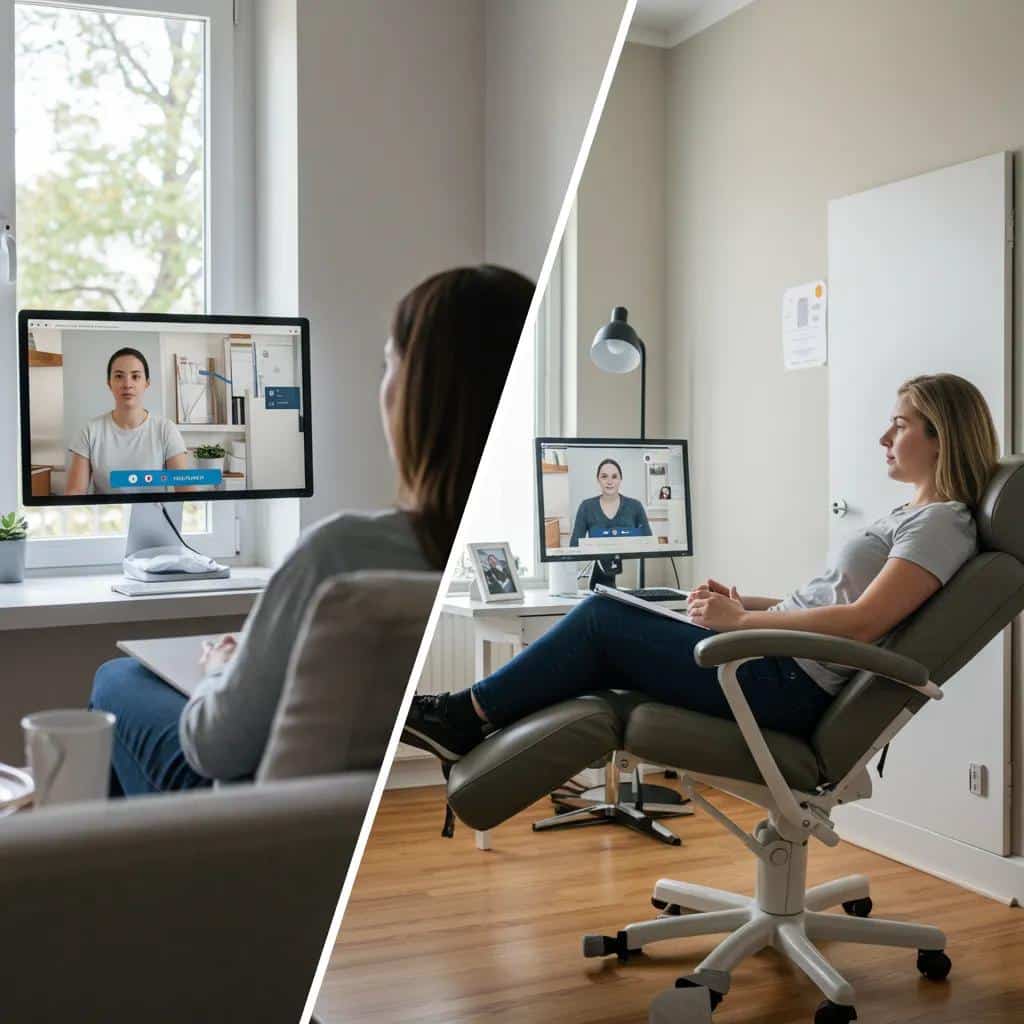
Virtual mental health therapy improves access, convenience, and continuity of care while maintaining clinical effectiveness for many common conditions such as anxiety and depression. Mechanistically, telehealth removes geographic and mobility constraints, enabling more consistent attendance and quicker session scheduling, which enhances treatment adherence and outcomes. Evidence from recent research indicates comparable effectiveness of remote CBT and other structured therapies for mood and anxiety disorders, while telehealth also reduces stigma for some patients who prefer receiving care at home. The following list highlights core benefits and how they translate to real-world outcomes.
Virtual therapy yields several practical benefits:
- Increased Access: Remote sessions remove travel barriers and broaden provider options within Orange County.
- Scheduling Flexibility: Evening or daytime virtual slots make it easier to sustain weekly treatment.
- Continuity of Care: Telehealth preserves therapeutic momentum during relocations, illness, or mobility limitations.
- Reduced Stigma: Receiving care privately at home can lower barriers to seeking help.
These benefits connect directly to accessibility and convenience details, which explain who gains the most from virtual formats and how clinicians mitigate digital divide issues.
| Benefit | How It Works | Outcome/Value |
|---|---|---|
| Accessibility | Remote sessions via video/phone remove travel/time barriers | Higher attendance and broader provider choice |
| Convenience | Flexible scheduling and device-friendly platforms | Improved adherence to treatment plans |
| Continuity | Secure portals for notes and messaging maintain treatment flow | Sustained symptom improvement over time |
| Privacy & Comfort | Home-based sessions reduce perceived stigma | Increased willingness to engage in therapy |
This table clarifies benefit mechanisms and expected patient-level outcomes, helping readers weigh virtual care against in-person options and leading into evidence about comparative effectiveness.
How Does Virtual Therapy Improve Accessibility and Convenience?
Virtual therapy reduces transportation, time, and geographic barriers so people with limited mobility, caregiving responsibilities, or busy schedules can attend regularly. For rural or transit-limited residents of Orange County, virtual care opens access to clinicians with specific expertise who might otherwise be out of reach. Clinicians and administrative staff can provide brief tech orientation and alternative formats—such as phone sessions—when connectivity is inconsistent, and many platforms support captioning and device-agnostic access to improve inclusivity. Addressing these accessibility considerations directly helps readers plan practical steps for their first session and sets expectations for how therapists adapt approaches to each client’s circumstances.
Clinicians often offer prep checklists and brief tech checks in advance to reduce session disruptions, which prepares readers for the next section on what to expect during a virtual session.
Is Virtual Therapy as Effective as In-Person Counseling?
Current research indicates that virtual therapy—especially structured interventions like CBT—can be as effective as in-person counseling for treating anxiety, depression, and many other common conditions when delivered by licensed clinicians. Meta-analyses and practice guidelines recommend telehealth as a valid modality, though complex cases (e.g., active suicidality, severe psychosis) may require in-person assessment or blended care models. The choice between virtual and in-person should consider clinical severity, patient preference, and safety needs; clinicians can recommend stepped care approaches that begin virtually and shift to in-person care if necessary. Understanding these evidence boundaries helps patients choose the right modality and anticipate when an in-person referral may be advised.
These effectiveness considerations naturally inform the practical “what to expect” checklist that follows, ensuring patients enter sessions with realistic goals and safety plans.
What to Expect During Your Virtual Therapy Sessions?
Virtual therapy sessions typically follow a predictable structure—intake and consent, check-in, focused therapeutic work, and wrap-up with homework and follow-up—while integrating secure documentation and safety planning. The mechanism that makes online sessions effective is the preservation of therapeutic structure alongside digital tools for homework, tracking, and messaging. Knowing the session phases reduces anxiety and increases therapeutic productivity, so below is a practical checklist you can use before and during your first appointment.
Before the checklist, here is what a typical online session entails:
- Pre-session paperwork and consent completed via a secure portal.
- A brief technology check and safety verification at the start of the session.
- Structured therapeutic work using evidence-based techniques.
- Post-session notes, scheduling, and asynchronous follow-up as needed.
This sequence prepares you to complete the actionable checklist below and understand the timing and technical expectations during a session.
How to prepare and what to expect:
- Test your device and connection: Ensure your camera, microphone, and Wi-Fi work before the session.
- Choose a private space: Find a quiet, confidential setting and use headphones for sound privacy.
- Gather relevant documents: Have your intake forms, medication list, and any symptom tracking ready.
- Plan session goals: Bring 1–2 topics or questions to focus the therapeutic work.
Preparing with this checklist reduces tech-related interruptions and supports a productive session; next, learn the common structure and timing of a typical virtual session.
| Session Phase | Typical Duration | Purpose/Outcome |
|---|---|---|
| Check-in & tech | 5–10 minutes | Verify identity, safety, and platform functioning |
| Therapeutic work | 30–40 minutes | Core intervention (CBT, DBT skills practice, processing) |
| Wrap-up & planning | 5–10 minutes | Review homework, schedule follow-up, document safety plan |
This session breakdown helps normalize timing and content so clients can arrive prepared and engaged for clinically effective remote treatment.
How Do You Prepare for Your First Online Therapy Session?
Preparing for your first online therapy session involves technical steps, privacy planning, and clarifying goals so the clinician can begin assessment efficiently. Start by completing any electronic intake forms and consent documents, test your device camera and microphone, and select a private space with minimal interruptions to protect confidentiality. Have a list of current medications, pressing symptoms, and 1–2 treatment goals to share during intake so clinicians can tailor the initial assessment. Preparing this way streamlines the appointment and allows more time for therapeutic work during the session itself.
A smooth first session sets the stage for the session structure described next, where you’ll see how time is typically allocated and what therapeutic activities are common.
What Is the Typical Structure of a Virtual Therapy Session?
Most virtual therapy sessions follow a time-based structure that mirrors in-person care: a brief check-in, focused therapeutic interventions, and a wrap-up with goals and homework. Clinicians often allocate about 5–10 minutes for check-in and safety verification, 30–40 minutes for the therapeutic work (skill practice, cognitive restructuring, trauma processing when appropriate), and 5–10 minutes for a summary and planning next steps. Therapists routinely assign homework—such as thought records or behavioral experiments—that clients complete offline and discuss in subsequent sessions to reinforce progress. This structure enables measurable progress and clear accountability between sessions, which contributes to improved outcomes over time.
This procedural clarity leads naturally into concrete information about what virtual services a local provider like Huntington Beach Mental Health offers for Orange County residents.
Which Virtual Therapy Services Are Available at Huntington Beach Mental Health?
Huntington Beach Mental Health provides a range of virtual services tailored to individual and family needs, adapting core modalities to telehealth while prioritizing client-centered, evidence-based care. Services focus on individual therapy, group therapy, and family therapy that can be adapted to virtual formats, with treatment plans individualized based on assessment and clinical goals. The following table maps common virtual services to who they typically serve and the primary features clients can expect when engaging remotely.
| Service | Who It’s For | Key Features |
|---|---|---|
| Individual therapy | Adults and adolescents with mood, anxiety, or life stressors | One-on-one sessions via secure video, personalized treatment plans, homework assignments |
| Group therapy | Individuals seeking peer-supported skills (e.g., DBT skills group) | Structured group sessions with skill-building focus, facilitator-led virtual meetings |
| Family therapy | Families navigating relationship challenges or adolescent concerns | Multi-person virtual sessions, communication-focused interventions, coordinated care planning |
This table helps readers match services to needs and sets expectations for virtual session format; the next subsection describes specific modalities and how treatment plans are personalized.
What Types of Virtual Therapy Does HBMH Provide?
Huntington Beach Mental Health offers individual, group, and family therapy adaptable to telehealth, enabling clinicians to deliver CBT, DBT-informed skills training, and supportive psychotherapeutic approaches remotely. Individual therapy sessions focus on symptom reduction and skills development tailored to each client’s diagnosis and goals, while group therapy provides peer learning and practice of coping skills. Family sessions concentrate on communication patterns and shared problem-solving with multiple participants joining securely from different locations. These virtual modalities maintain session lengths and therapeutic structure consistent with best practices, and enrollment starts with a streamlined intake and clinical matching process.
Describing these modalities clarifies how personalized treatment plans are created for virtual care, which the next subsection explains in detail.
How Are Treatment Plans Personalized for Virtual Sessions?
Treatment plans at Huntington Beach Mental Health begin with a comprehensive intake assessment that identifies symptoms, functional goals, and modality preferences; clinicians then collaborate with clients to select evidence-based interventions that translate well to remote delivery. Personalization includes choosing between individual or group formats, determining session frequency, and adapting homework and skill practices for at-home use. Progress is tracked through session notes and outcome measures, and plans are adjusted regularly based on client feedback and symptom changes. This collaborative approach ensures virtual care aligns with each client’s life context and therapeutic needs, and it prepares clients for measurable steps toward recovery.
These personalization practices support effective therapist matching and point readers toward the next section on selecting the right virtual therapist in Orange County.
How Do You Choose the Right Virtual Therapist in Orange County?
Choosing the right virtual therapist involves evaluating licensure, specialties, telehealth competence, and personal fit so the therapeutic relationship can form effectively online. Licensure and credentials indicate clinical training and legal authority to practice in California, while specializations—such as trauma, mood disorders, or adolescent therapy—ensure targeted expertise for specific conditions. Additional considerations include a clinician’s telehealth training, approach to safety planning, and openness to discussing therapeutic techniques during an initial consult. Knowing what to look for reduces search time and increases the chance of a good match, which in turn improves outcomes and engagement.
Below is a checklist readers can use when comparing potential virtual therapists.
- Verify licensure and state authorization to provide care in California.
- Confirm clinical specialties align with your primary concerns or diagnosis.
- Ask about telehealth experience, platform familiarity, and privacy practices.
This checklist helps you vet clinicians before booking a session and leads into details about qualifications and the matching process offered locally.
What Qualifications and Specializations Do Our Virtual Therapists Have?
Virtual therapists typically hold licenses such as LCSW, LMFT, or clinical psychology credentials and maintain continuing education on evidence-based modalities and telehealth competency. Specializations commonly include treatment for anxiety, depression, trauma, adolescent issues, and family systems, with clinicians trained to adapt CBT, DBT, and relational approaches to remote formats. Telehealth competency includes familiarity with secure platforms, privacy and consent procedures, and virtual risk assessment, which are essential for providing safe and effective online care. Understanding these qualifications helps clients set appropriate expectations and prepare targeted questions for initial consultations.
Knowing typical qualifications helps inform the therapist matching process at local providers, which the following subsection describes.
How Does Therapist Matching Work for Virtual Mental Health Counseling?
Therapist matching generally begins with an intake form capturing clinical needs, scheduling preferences, demographic considerations, and modality preferences; administrative staff then match clients with clinicians whose expertise and availability align with those factors. Many providers recommend an initial consult or trial session to assess rapport and fit, and they offer options to switch clinicians if the match is not ideal. Huntington Beach Mental Health facilitates this process by using client-centered matching that prioritizes fit and continuity, and clients are encouraged to request adjustments if their needs change. If you prefer assistance with matching or scheduling a trial session, Huntington Beach Mental Health can help arrange clinician matches and initial appointments for Orange County residents.
This explanation builds trust in the matching process and transitions into practical considerations about costs, insurance, and privacy for virtual therapy.
What Are the Costs, Insurance Options, and Privacy Considerations for Virtual Therapy?
Costs and insurance coverage for virtual therapy vary by payer and plan, but many California insurers reimburse telehealth services similarly to in-person care, subject to plan rules and prior authorization requirements. Typical payment structures include insurance billing, self-pay rates, and sliding-scale options where available; patients should verify benefits directly with their insurer and confirm provider network participation. Privacy considerations focus on HIPAA-compliant platforms, informed consent for telehealth, and patient practices like using private spaces and headphones to protect confidentiality. Below is a concise table mapping common payment and privacy options to practical patient actions and impacts.
| Payment/Option | Insurance/Payment Details | Typical Patient Action |
|---|---|---|
| In-network billing | Coverage varies by plan; may require authorization | Verify benefits and confirm provider network status |
| Out-of-network / self-pay | Patients may submit claims for partial reimbursement | Compare self-pay rates and reimbursement potential |
| Sliding scale / financial assistance | Availability depends on provider policies | Inquire with provider about eligibility and terms |
This comparison clarifies choices and patient responsibilities when planning for virtual therapy, and the next subsection addresses how to verify coverage in California.
Does Insurance Cover Virtual Mental Health Therapy in California?
Many insurers in California cover telehealth mental health services, often under parity rules that require similar coverage to in-person care, but coverage details depend on your specific plan, network, and medical necessity criteria. To verify benefits, call your insurer, check your member portal for telehealth coverage, and ask whether prior authorization or a specific provider credentialing is required. Huntington Beach Mental Health can assist clients by offering guidance on verification steps and answering questions about billing workflows, but final coverage determinations are made by insurers. Taking these verification steps before the first appointment reduces unexpected out-of-pocket costs and ensures smoother claims processing.
Confirming coverage and understanding patient financial responsibility prepares you for secure and confidential virtual sessions, which the next subsection addresses in terms of privacy protections.
How Is Client Privacy Protected During Virtual Sessions?
Client privacy during virtual therapy is protected through HIPAA-compliant telehealth platforms, encrypted video transmission, secure patient portals for intake and messaging, and informed consent procedures that outline limitations and emergency protocols. Clinicians document consent and create safety plans for situations such as technology failure or emergent risk, and they instruct clients on practical privacy measures like using headphones and choosing a private room. Patients also share responsibility for their environment: disabling screen-sharing, securing their Wi-Fi network, and confirming local emergency contacts at intake helps clinicians respond effectively if a crisis arises. Understanding these protections gives clients confidence to engage openly in virtual therapy while knowing the safeguards in place.
Huntington Beach Mental Health can answer privacy-related questions and assist with benefit verification for clients seeking virtual services in Orange County.