
Virtual Reality Therapy for Mental Health: Where It Helps and How It Works
Virtual reality therapy for mental health uses immersive simulation to recreate situations, sensations, or social contexts that matter for treatment, allowing clinicians and patients to practice coping skills in a controlled, repeatable way. This article explains the core mechanisms of VR therapy, the clinical applications where it shows strong evidence, and practical guidance for patients considering VR-enhanced care. Many people with anxiety, phobias, PTSD, or social anxiety struggle to access safe, graduated practice in real life; VR exposure therapy and related VR-CBT approaches provide a scalable, measurable alternative that complements traditional psychotherapy. Readers will learn what VR therapy is, how VR exposure therapy works for anxiety and phobias, which VR techniques are used in PTSD treatment, the broad benefits for engagement and skill transfer, and realistic ways a local provider can integrate VR into existing services. The article weaves current research perspectives and patient-facing guidance—covering session flow, safety screening, and how to begin—so you can evaluate whether VR-enhanced care might fit your recovery plan.
What Is Virtual Reality Therapy in Mental Health?
Virtual reality therapy in mental health is a clinician-guided use of immersive technology—head-mounted displays, scenario software, and clinician dashboards—to deliver therapeutic exposures, skills practice, or mindfulness in a controlled environment. The mechanism relies on sensory immersion and controllable stimulus intensity so therapists can grade experiences and measure physiologic or behavioral responses, which supports targeted learning and symptom reduction. As a modality, VR can be delivered in-clinic with therapist supervision, offered via therapist-prescribed at-home programs, or used as adjunctive software during standard cognitive behavioral therapy sessions. Limitations include the need for clinical screening, potential simulator sickness for some users, and the requirement for therapist training to interpret data and pace exposures safely.
How VR complements psychotherapy centers on controllability and measurable progress, which leads directly into specific mechanisms by which VR enhances exposure and CBT protocols and the typical conditions treated in practice. The next subsections explain those mechanisms and the primary clinical targets for VR-enhanced care.
How Does VR Therapy Enhance Traditional Mental Health Treatments?
VR therapy enhances traditional treatments by providing repeatable, graded practice that mirrors clinical objectives in CBT and exposure therapy while maintaining safety and therapist control. Immersive scenarios create realistic cues that activate avoidance or anxiety responses, allowing clinicians to guide systematic desensitization and cognitive restructuring in real time. Data captured during sessions—subjective units of distress, heart rate trends, or behavioral metrics—helps clinicians tailor intensity and monitor progress across sessions. Patients benefit from rehearsal opportunities and between-session assignments that are easier to standardize, which often improves homework adherence and accelerates skill transfer to daily life.
This augmentation works best when VR is integrated into a structured therapeutic plan rather than used as a stand-alone novelty, and understanding which conditions benefit most clarifies when VR should be considered as part of a care pathway.
Which Mental Health Conditions Can VR Therapy Address?
VR therapy has the strongest evidence base for specific anxiety-related conditions—simple phobias (flying, heights, spiders), social anxiety (public speaking, social interactions), panic disorder with agoraphobic components, and PTSD—where controlled exposure and memory processing are core interventions. Emerging work shows promise for adjunctive treatments in depression (behavioral activation, anhedonia-targeted simulations), autism-related social skills training, and substance-use relapse prevention through cue exposure. Contraindications include uncontrolled seizure disorders, severe dissociation, or acute psychosis; careful screening is essential to ensure safety and appropriateness.
Recognizing suitable candidates for VR-enhanced interventions helps clinicians decide whether to prioritize in-vivo exposure, imaginal work, or VR-assisted sessions, and the following section examines VR exposure therapy specifically for anxiety and phobias.
How Does VR Exposure Therapy Help with Anxiety and Phobias?
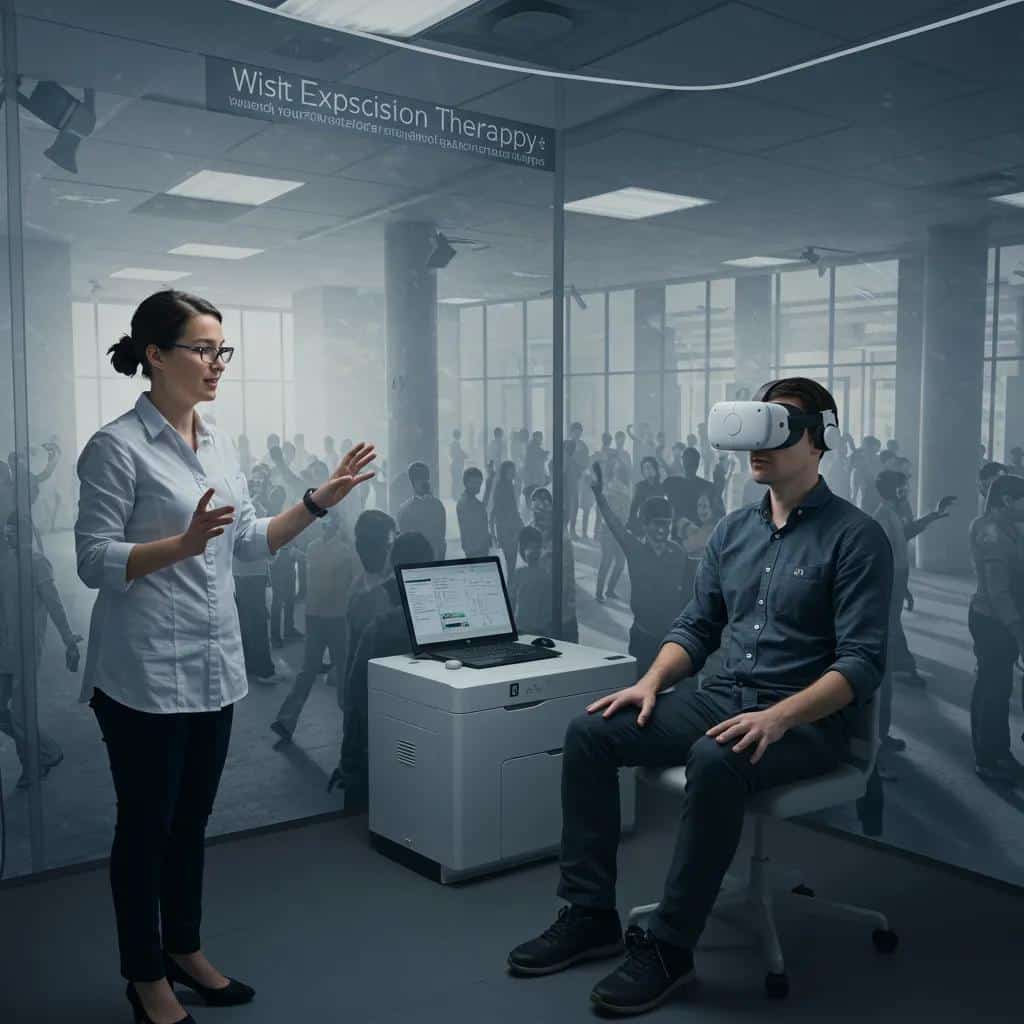
VR exposure therapy for anxiety recreates feared situations in a therapist-controlled virtual environment, enabling graded, repeated practice without the logistical or ethical constraints of in-vivo exposure. The mechanism centers on safe activation and habituation: patients encounter anxiety triggers that are titrated to a tolerable level while practicing cognitive and behavioral coping strategies taught in CBT. Measurable benefits include reduced avoidance, improved functional outcomes, and often faster access to exposure scenarios that are otherwise hard to arrange in real life. Typical session structure includes assessment, orientation to equipment, stepped exposures with therapist coaching, and consolidation through debrief and between-session assignments.
Different exposure approaches vary in how they deliver stimulus intensity, accessibility, and adherence outcomes.
Research indicates that virtual reality is a useful tool to improve exposure therapy and can be a good option to analyze the processes and mechanisms involved in exposure therapy.
Virtual Reality Exposure Therapy for Phobias: Recent Progress and Future Directions
Evidence reveals that virtual reality (VR) is an effective treatment for phobias and useful for studying specific issues, such as pharmacological compounds and behavioral manipulations, that can enhance treatment outcomes. In addition, some variables, such as sense of presence in virtual environments, have a significant influence on outcomes, but further research is needed to better understand their role in therapeutic outcomes. We conclude that VR is a useful tool to improve exposure therapy and it can be a good option to analyze the processes and mechanisms involved in exposure therapy and the ways this strategy can be enhanced. In the coming years, there will be a significant expansion of VR in routine practice in clinical contexts.
| Approach | Mechanism | Patient Benefit |
|---|---|---|
| VR Exposure Therapy | Immersive simulation with graded control by clinician | High accessibility to rare or complex scenarios; repeatable and measurable exposures |
| In vivo Exposure | Real-world confrontation with feared stimuli | Strong ecological validity; direct generalization when feasible |
| Imaginal Exposure | Guided recollection or visualization | Useful when real exposure is impractical; depends on patient imagery ability |
What Is VR Exposure Therapy and How Is It Used?
VR exposure therapy is used by therapists to present scenarios—such as a crowded elevator, an airplane cabin, or a social presentation—in gradual steps calibrated to each patient’s distress threshold. A typical session begins with a brief assessment and orientation to the headset, followed by low-intensity exposure and skill coaching (breathing, cognitive reframing), with intensity increased only as the patient demonstrates coping. Sessions commonly last 45–90 minutes and are scheduled weekly or biweekly, with frequency adjusted by clinical need and progress. Therapists use objective and subjective measures during sessions to guide pacing and decide when to assign between-session practice.
Patients new to VR usually receive an initial safety briefing and short orientation exposures to minimize simulator sickness; this preparation supports effective engagement and transitions to higher-intensity practice.
What Are the Benefits of VR Exposure Therapy Compared to Traditional Methods?
VR exposure therapy reduces barriers inherent in in vivo exposure—logistics, safety concerns, and difficulty recreating rare contexts—while often improving patient engagement and adherence. Controlled, repeatable exposures let clinicians standardize dose and intensity, which supports better tracking of progress and clearer graduation criteria. VR can reduce anticipatory avoidance by offering a safer perceived context for practice, and readily deliverable homework modules encourage between-session rehearsal. Limitations include the need for clinician training, equipment costs, and the fact that some patients may need supplementary in vivo practice to ensure full generalization.
- VR exposure therapy offers repeatable practice in scenarios that are costly or impractical to recreate in real life.
- VR allows therapists to titrate stimulus intensity precisely, improving patient safety and confidence.
- VR-enhanced homework modules increase between-session practice and measurable adherence.
These practical advantages make VR a compelling option when integrated thoughtfully into evidence-based treatment plans; the next section examines VR applications for PTSD specifically.
How Is Virtual Reality Used in PTSD Treatment?
Virtual reality is used in PTSD treatment primarily as a medium for prolonged or narrative exposure, where trauma-linked cues are recreated to support memory processing and emotional reappraisal under therapist guidance. The immersive context can recreate sensory and situational elements that are central to traumatic memories, allowing clinicians to scaffold re-exposure and cognitive restructuring in a contained setting. VR also enables adjunctive techniques—such as biofeedback, paced breathing training, or skills rehearsal—within the same session, supporting multi-modal recovery. Research through controlled trials indicates clinically meaningful symptom reductions for many patients, though effect sizes vary with protocol fidelity and patient characteristics.
Research has evaluated the efficacy of virtual reality exposure therapy (VRET) in the treatment of PTSD, with several studies showing statistically significant results.
Virtual Reality Exposure Therapy for PTSD: A Systematic Review
The use of Information and Communication Technologies, such as virtual reality, has been employed in the treatment of anxiety disorders with the goal of augmenting exposure treatment, which is already considered to be the first-line treatment for Post-traumatic Stress Disorder (PTSD). To evaluate the efficacy of virtual reality exposure therapy (VRET) in the treatment of PTSD, we performed a systematic review of published articles using the following electronic databases: Web of Science, PubMed, PsycINFO, and PILOTS. Eligibility criteria included the use of patients diagnosed with PTSD according to DSM-IV, the use of cognitive behavioral therapy (CBT) and the use of virtual reality for performing exposure. 10 articles were selected, seven of which showed that VRET produced statistically significant results in comparison to the waiting list. However, no difference was found between VRET and exposure treatment.
Below is a focused summary of VR techniques commonly applied in PTSD work, followed by evidence cues.
| VR Technique | Typical Use Case | Evidence / Outcome Summary |
|---|---|---|
| Virtual Reality Exposure Therapy (VRET) | Graded re-exposure to trauma cues in a controlled environment | Randomized and controlled trials show significant symptom reduction in many cohorts |
| Narrative Reconstruction | Use of virtual contexts to reframe trauma memory and integrate cognitive processing | Supports cognitive reappraisal and meaning-making in therapist-led protocols |
| Multisensory Augmentation (audio, visual, physiologic cues) | Enhances presence to target specific traumatic triggers | May improve engagement and specificity of exposure, evidence emerging but promising |
What VR Techniques Are Effective for PTSD Recovery?
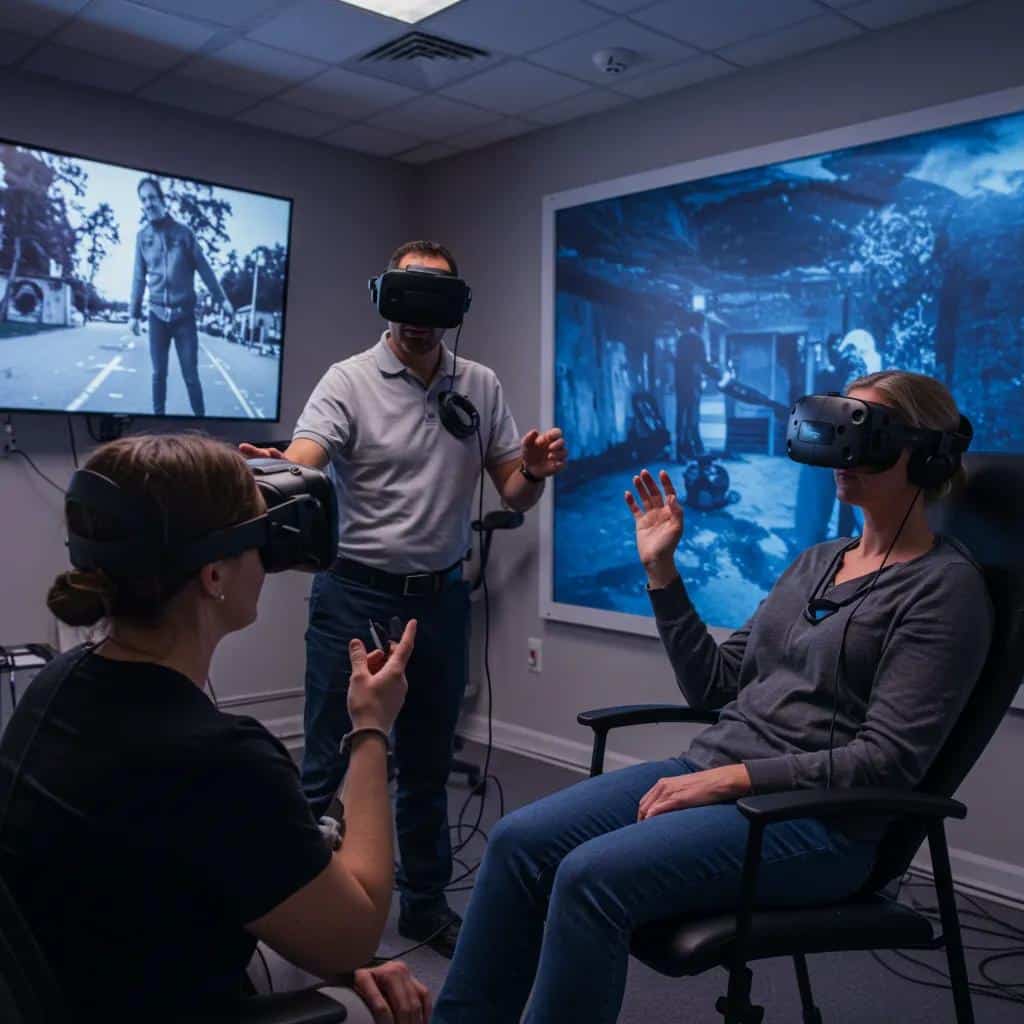
Effective VR techniques for PTSD include VRET, narrative reconstruction within immersive contexts, and auxiliary tools like biofeedback that provide real-time physiologic information during exposures. VRET recreates situational cues (locations, sounds, movement) to promote habituation and extinction of conditioned responses, while narrative reconstruction uses immersive scenes to help patients reframe memory content and integrate new meanings. Clinician training is essential for safely pacing exposures and interpreting physiologic feedback; safety protocols include monitoring dissociation and providing grounding strategies during sessions.
These techniques often pair best with established therapeutic frameworks such as prolonged exposure and cognitive processing therapy, and careful integration supports better retention and generalization.
What Evidence Supports VR Therapy for PTSD?
Recent randomized controlled trials and meta-analyses show that VR-based PTSD protocols can produce moderate to large symptom reductions compared to waitlist or supportive care, with some studies finding parity with traditional prolonged exposure when protocol fidelity is high. Research limitations include heterogeneous samples, variable technology platforms, and differing outcome measures, which complicate effect-size aggregation. Nevertheless, practical outcome measures—reduced avoidance, lower re-experiencing scores, and improved functional outcomes—have been observed across multiple trials, supporting VR as an evidence-informed option when delivered by trained clinicians.
Understanding the evidence base helps clinicians weigh benefits and constraints and informs decisions about program design and training needs; the next section synthesizes broader advantages of VR across mental health care.
What Are the Overall Benefits of VR Therapy for Mental Health?
The overall benefits of VR therapy for mental health include improved patient engagement, greater opportunities for skill rehearsal, standardized exposure dosing, and enhanced clinician measurement of progress. Immersion increases emotional fidelity and motivation, while repeatability and data capture support personalized pacing and objective outcome tracking. VR tools also expand access by offering scenario-based practice that is otherwise impractical, supporting equity of treatment options for varied patient needs. These advantages translate into concrete patient strategies: structured between-session VR practice, measurable progress charts, and targeted booster sessions to maintain gains.
Virtual reality offers a powerful potential for mental health, enabling individuals to repeatedly experience problematic situations in computer-generated environments and learn to overcome difficulties through evidence-based psychological treatments.
Virtual Reality in Mental Health: Assessment, Understanding, and Treatment
Mental health problems are inseparable from the environment. With virtual reality (VR), computer-generated interactive environments, individuals can repeatedly experience their problematic situations and be taught, via evidence-based psychological treatments, how to overcome difficulties. VR is moving out of specialist laboratories. Our central aim was to describe the potential of VR in mental health, including a consideration of the first 20 years of applications. A systematic review of empirical studies was conducted. In all, 285 studies were identified, with 86 concerning assessment, 45 theory development, and 154 treatment. The main disorders researched were anxiety (n= 192), schizophrenia (n= 44), substance-related disorders (n= 22) and eating disorders (n= 18). There are pioneering early studies, but the methodological quality of studies was generally low. The gaps in meaningful applications to mental health are extensive. The most established finding is that VR exposure-
Below is a table summarizing benefit areas, how VR delivers them, and practical patient tips to maximize impact.
| Benefit Area | How VR Delivers It | Patient Example / Practical Tip |
|---|---|---|
| Engagement | Immersive stimuli and interactive tasks increase motivation | Use guided VR homework between sessions to reinforce skills daily |
| Skill Acquisition | Graded rehearsal with feedback enhances learning | Practice coping skills in VR, then intentionally apply them in real situations |
| Accessibility | Simulated scenarios remove logistical barriers to exposure | Choose VR modules for rare scenarios (e.g., flying) before in vivo attempts |
| Measurement | Objective logs and clinician dashboards track progress | Review session metrics with your therapist to set clear goals |
How Does VR Therapy Improve Patient Engagement and Empowerment?
VR therapy improves engagement by converting abstract coping strategies into active, experiential practice that feels relevant and trackable. Games, progress metrics, and immediate feedback provide reinforcement, while graded exposures yield tangible markers of mastery that bolster self-efficacy. Patients often describe empowerment from seeing measurable progress across sessions and from having structured between-session tasks that feel achievable. Clinicians can harness these engagement mechanisms to design homework, set objective milestones, and schedule booster exposures to maintain gains.
Increased engagement reduces dropout and supports consolidation of skills into daily life, which leads to considerations about long-term maintenance and booster work.
Can VR Therapy Provide Lifelong Tools for Mental Well-Being?
VR can provide lifelong tools by facilitating durable skill learning—such as relaxation, public-speaking practice, or anxiety management—that patients can refresh with booster modules or occasional supervised sessions. Transfer requires intentional between-session practice and graded real-world application, so therapists typically create scaffolding that moves from VR rehearsal to in vivo practice. Digital tools and mobile-assisted modules can sustain access to practice opportunities, and periodic assessment helps determine when booster sessions are warranted to renew confidence and coping skill fluency.
Planning for maintenance at the outset—setting milestone checks and accessible practice modules—promotes durable benefits beyond the acute treatment window.
How Can Huntington Beach Mental Health Integrate VR Therapy Services?
Huntington Beach Mental Health could integrate VR therapy services by aligning VR-enhanced modules with existing offerings—such as CBT, exposure therapy tracks, and group skills training—to expand local access while preserving evidence-based practice. Implementation pathways include phased investment in clinician training, selection of validated scenario libraries that map to phobia and PTSD protocols, and safety policies for screening and monitoring. Framing VR as a complement to existing services honors the clinic’s mission to empower individuals and supports a client-centered enrollment pathway that emphasizes informed consent and measurable outcomes. For updates on local programming and availability, residents can check Huntington Beach Mental Health’s public business listings or contact the practice directly to ask about new VR-enhanced offerings.
What VR-Enhanced Programs Could Complement Existing Treatments at HBMH?
Potential programs include a VR-augmented exposure track for specific phobias integrated into CBT, a PTSD-focused protocol combining narrative VR and clinician-led processing, and group VR social skills sessions that use simulated interactions to rehearse social strategies. Each program would identify target populations, outline session cadence (weekly therapist-led VR plus homework modules), and define outcome measures (symptom scales, functional markers). Clinician training priorities should include trauma-informed protocols, simulator-sickness mitigation, and data interpretation; measurement strategies can incorporate session logs and patient-reported outcomes to refine referral pathways.
Starting with pilot programs and clearly defined referral criteria allows Huntington Beach Mental Health to scale offerings responsibly and collect local outcome data to refine services.
How Will VR Therapy Expand Mental Health Care Options in Orange County?
Introducing VR therapy locally increases access to specialized tracks—like targeted PTSD and phobia programs—that may otherwise require travel or limited appointment types. VR can also enable efficient clinic workflows by standardizing certain exposure modalities, allowing clinicians to offer more targeted short-term tracks alongside ongoing medication management and individual therapy. Community partnerships—such as clinician training collaborations and outreach to primary care providers—can create referral pipelines and increase awareness among Orange County residents. These local expansions align with Huntington Beach Mental Health’s mission of empowering individuals on a recovery journey while adding measurable, evidence-informed options to the regional care mix.
Piloting VR services with clear safety protocols and patient education ensures community trust and helps build capacity for sustained program growth.
What Are Common Questions About Virtual Reality Therapy for Mental Health?
Patients commonly ask whether VR therapy is safe and who is a good candidate, how to start, and what to expect from sessions; practical, evidence-informed answers can guide decision-making and referrals. Safety hinges on screening for contraindications, providing orientation to minimize discomfort, and ensuring clinician supervision during higher-intensity exposures. Beginning VR therapy usually involves a clinical assessment, informed consent, a tech orientation, and a stepped exposure plan with measurable goals. The next subsections provide concise, actionable answers about safety and startup steps that patients and families can use to discuss VR with their clinician.
Is VR Therapy Safe and Accessible for All Patients?
VR therapy is safe for many patients when clinicians conduct appropriate screening and follow monitoring protocols; common screening items include seizure history, severe dissociation, and vestibular sensitivity. Accessibility options include seated sessions, adjusted scenario intensity, and alternative modalities (imaginal exposure or in-vivo graded plans) for those with sensory or mobility limitations. Clinician supervision, grounding techniques, and short orientation runs mitigate simulator sickness and dissociation risk. For patients with medical contraindications or high dissociation risk, therapists typically opt for non-immersive alternatives or proceed only with specialized monitoring.
Clear screening and individualized accommodations help ensure that VR therapy expands access rather than creating new barriers, and the next subsection explains practical steps to begin.
How Do Patients Start VR Therapy and What Should They Expect?
Starting VR therapy typically follows a 4-step pathway: clinical assessment and informed consent, orientation to the equipment and safety briefing, a beginning session with low-intensity exposure and skills coaching, and an agreed plan for between-session practice and progress checkpoints. Patients should expect initial sessions focused on comfort, acclimation, and goal-setting rather than immediate high-intensity exposure; progress is tracked with both symptom measures and session logs. Typical timelines vary, but many patients see meaningful changes within several weeks of consistent, structured exposure combined with CBT techniques. Expect collaborative pacing—your clinician will adjust intensity based on both subjective distress and objective markers.
- Assessment and Consent: Complete a clinical intake and discuss goals and contraindications.
- Orientation: Receive a safety briefing and short acclimation exposures to the headset.
- Graded Sessions: Begin low-intensity practice with therapist guidance and skill coaching.
- Between-Session Practice: Use assigned modules or real-world tasks to generalize learning.
– The numbered starter checklist provides actionable steps to initiate VR therapy.
– Following these steps ensures a safe, measured introduction and consistent progress tracking.
This article has outlined what VR therapy is, how it works for anxiety, phobias, and PTSD, the broader benefits for engagement and lifelong skills, and practical integration ideas for a local provider. For Orange County residents seeking services, Huntington Beach Mental Health is exploring VR-enhanced programs that would complement existing evidence-based treatments and can be contacted for updates about local availability and enrollment pathways.