
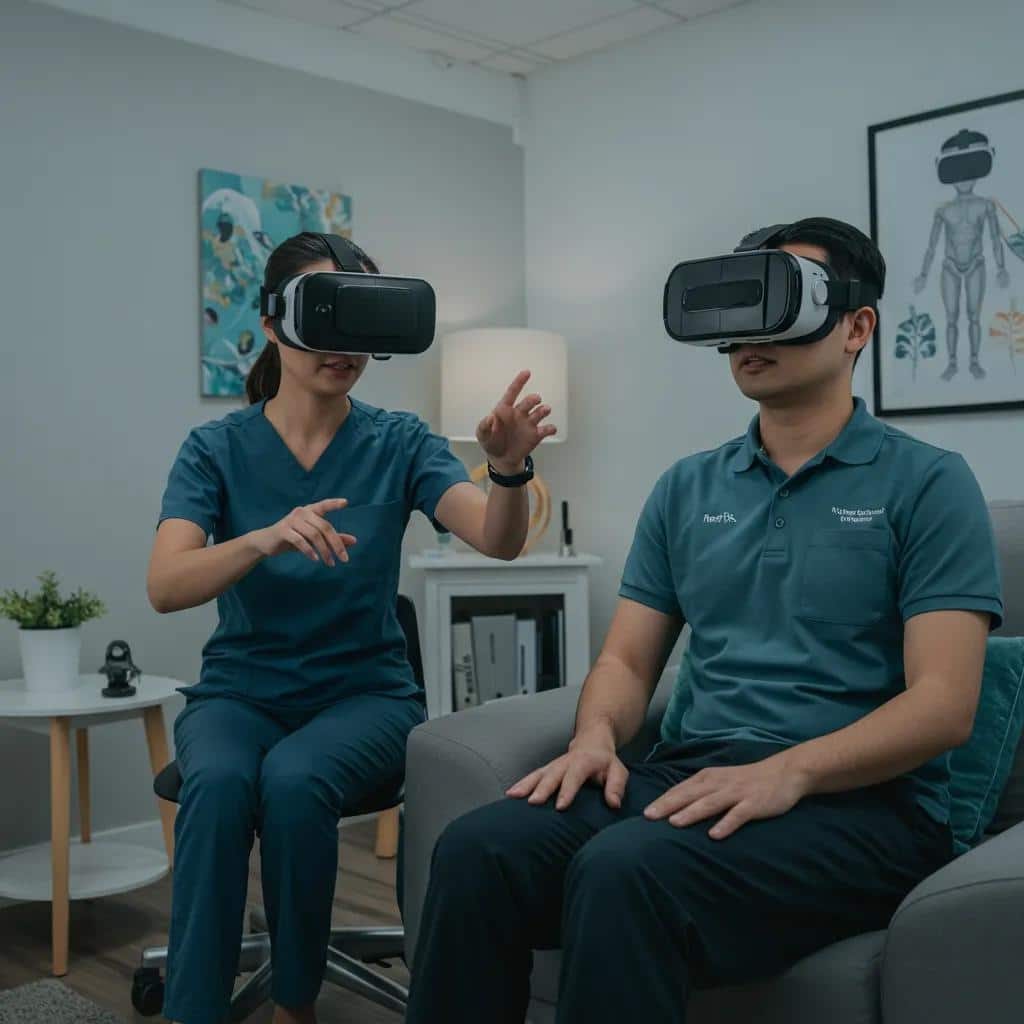
Virtual Reality Mental Health: Ensuring Safety and Ethics in VR Therapy
Virtual reality (VR) mental health therapy uses immersive head-mounted displays and therapeutic software to deliver evidence-based interventions such as exposure therapy and VR-assisted cognitive behavioral therapy, offering controlled, repeatable experiences that support symptom reduction for conditions like anxiety and PTSD. This article explains why safety and ethics are central to VR-based care, how clinicians and clinics reduce physical and psychological risks, and what patients and families should expect before, during, and after VR sessions. Readers will learn the core ethical pillars—particularly informed consent and data privacy—practical screening and contraindications, how VR augments proven treatments, and the special protections required for children and adolescents. The piece also describes how Huntington Beach Mental Health approaches integration of VR into clinical care in Orange County, focusing on screening, clinician training, monitoring, and enrollment pathways. Throughout, the guide balances technical details about simulator sickness, HIPAA-aligned safeguards, and clinician competence with plain-language steps patients can take to assess safety, creating a usable roadmap for anyone considering VR therapy. The next section outlines the key ethical considerations that determine whether VR is safe, effective, and respectful of patient rights.
What Are the Key Ethical Considerations in Virtual Reality Mental Health Therapy?
Virtual reality therapy raises unique ethical concerns because immersive environments intensify sensory and emotional responses, which amplifies the need for explicit informed consent, strong data privacy, and clinician competence to manage adverse reactions. Practitioners must ensure that patients understand VR-specific risks such as simulator sickness, dissociation, and emotional re-triggering, while also disclosing how session telemetry and recordings are stored and used. Ethical practice requires clinicians to maintain therapeutic boundaries inside virtual environments and to document decisions about exposure intensity and session termination. These pillars—consent, privacy, clinician competence, and duty of care—form a practical checklist patients can use when evaluating a VR program. The following list highlights the core ethical pillars and why each matters for patient safety.
- Informed Consent: Patients must receive clear explanations of VR-specific risks, alternatives, and the right to stop a session.
- Data Privacy: Telemetry, session logs, and any recordings require secure handling to prevent misuse.
- Clinician Competence: Clinicians need specific training in VR delivery, symptom monitoring, and de-escalation in immersive settings.
- Youth Protections: Minors require parental authorization plus age-appropriate assent and tailored session parameters.
These principles lead directly to practical consent practices that clarify what is communicated to patients before their first VR session.
VR for Informed Consent: Enhancing Patient Comprehension and Trust
The informed consent is a defining moment that should allow patients to understand their condition, what procedure they are undergoing, and what consequences may follow. This process should foster trust and promote confidence, without increasing patients’ anxiety. New immersive 3D imaging technologies may serve as a tool to facilitate this endeavor.
Patients in the experimental groups appreciated this communication experience, while their objective comprehension was higher ((score mean (SD)): group 1 82.65 (6.83); group 2 77.76 (10.19), as compared with the control group (57.70 (12.49);P< 0.001). Subjective comprehension and anxiety levels did not differ between experimental groups and control group.
3D virtual reality can help surgeons and patients in building a better relationship before surgery; immersive 3D-supported informed consent improves patients’ comprehension of their condition without increasing anxiety. This new paradigm may foster trust between surgeons and patients, possibly restraining medical-legal acts.
Informed consent through 3D virtual reality: a randomized clinical trial, 2021
How Is Informed Consent Handled in VR Therapy?
Informed consent for VR therapy is a focused process that explains what will happen during sessions, the specific risks tied to immersion, and how patient data will be handled, so that patients can make an informed choice about participation. Clinicians typically cover session structure, expected sensations (e.g., nausea, dizziness), emotional escalation possibilities, data collection practices, and the withdrawal process, then document the discussion. Consent workflows often combine written forms with a verbal review and an opportunity for patients to ask questions and decline aspects of treatment, which reinforces comprehension and respects autonomy. The following table clarifies core consent elements, what they cover, and example wording clinicians can adapt for clear patient communication.
This table defines VR-specific consent elements and offers sample wording clinicians can use to ensure transparency and comprehension.
| Consent Element | What It Covers | Example Wording / Practice |
|---|---|---|
| Risks and Side Effects | Simulator sickness, dizziness, emotional re-triggering | “You may feel nausea, disorientation, or strong emotions during or after VR; we will stop the session if you feel unwell.” |
| Data Collection & Use | Telemetry, session logs, recordings, retention | “Session telemetry will be stored securely for treatment planning and will not be shared without your permission.” |
| Right to Withdraw | Pause/stop session, discontinue treatment | “You can ask to pause or stop at any time; stopping will not affect other services.” |
| Alternatives & Benefits | Non-VR therapy options and anticipated gains | “VR is an adjunct to CBT; alternatives include standard talk therapy without VR exposure.” |
Clinicians should provide the consent form in advance and review key items aloud before the first VR exposure, creating a bridge to practical data protections described next.
What Data Privacy Measures Protect Patients in VR Mental Health?
Data generated during VR therapy includes movement telemetry, behavioral markers, and sometimes audio/video; this information can reveal sensitive behavioral patterns and must be protected with both technical and policy safeguards. Providers should vet VR platforms for encryption in transit and at rest, implement role-based access controls so only authorized clinicians see identifiable data, and apply data minimization and retention policies that limit storage to what is clinically necessary. Patients should be told whether data are stored on local clinic servers or third-party platforms and whether de-identified aggregates may be used for program improvement or research, ensuring transparency about sharing. Practical questions patients can ask include whether the VR software is HIPAA-aligned, what encryption methods are used, and how long session logs are retained, which helps them evaluate provider practices and trust.
Data Privacy and Ethics in Virtual Healthcare and Metaverse Applications
As digital health solutions proliferate, the protection of personal health information has become paramount, necessitating a comprehensive framework that addresses privacy concerns while fostering innovation. The integration of virtual healthcare environments and metaverse-based health applications is revolutionizing the delivery of medical services by enhancing accessibility, patient engagement, and real-time data exchange. However, these advancements bring significant challenges related to data privacy, ethical governance, and patient consent. Therefore, this chapter reviews the core issues surrounding data privacy in digital healthcare ecosystems, with a focus on how personal health information is collected, stored, and transmitted within immersive virtual and augmented environments. The study examines current data privacy regulations and ethical guidelines, assessing their applicability in virtual healthcare settings. It critically analyzes the risks of data breaches, unauthorized surveillance, and algorithmic bias, emphasizing the need for robust cybersecurity frameworks.
Data Privacy in Virtual Healthcare Environments and Ethical Guidelines for Metaverse Health Applications, JB Awotunde, 2025
How Does Huntington Beach Mental Health Ensure Safety in VR Therapy?
Huntington Beach Mental Health (HBMH) prioritizes patient safety through a clinic-level approach that combines thorough pre-session screening, clinician training on VR delivery, and clear in-session monitoring and termination procedures that reduce physical and psychological harm. Screening focuses on identifying contraindications, clarifying patient goals, and assessing readiness for immersive exposure, while clinician training emphasizes recognition of simulator sickness, dissociation, and emotional escalation. On-site safety measures include providing a controlled physical space, options for seated sessions, and protocols for rapid session termination and debriefing if distress occurs. HBMH’s mission-driven, client-centered approach emphasizes empowering patients through knowledge and skills, and clinicians document safety decisions and follow-up plans as part of routine care. The practical screening criteria and contraindication mapping below show how conditions are evaluated and what alternatives clinicians recommend.
The following table summarizes common contraindications, risk level, and recommended clinical actions or alternatives to VR therapy.
| Condition | Contraindication Level / Risk | Clinical Recommendation / Alternative |
|---|---|---|
| Epilepsy with uncontrolled seizures | High risk | Defer VR; consult neurology or use non-immersive therapies |
| Severe dissociative disorders | High risk | Prefer non-VR trauma therapies; if considered, require specialist oversight |
| Vestibular disorders / severe motion sensitivity | Moderate-High risk | Use seated, low-motion modules or avoid immersive exposures |
| Active psychosis or unmanaged mania | High risk | Avoid VR until symptoms are stabilized with appropriate care |
Before enrollment, clinicians at HBMH discuss these contraindications and, where appropriate, propose safer alternatives such as in vivo graded exposure or standard CBT techniques that achieve similar therapeutic goals without immersion. These procedural safeguards connect directly to actionable in-session guidelines for monitoring and responding to adverse effects.
What Are the Psychological and Physical Safety Guidelines for VR Therapy?
Safety guidelines for VR therapy combine pre-session checks, in-session monitoring, and post-session debriefing to reduce the likelihood and impact of simulator sickness and emotional destabilization. Clinicians ask screening questions about seizure history, vestibular sensitivity, migraine propensity, and prior dissociation; they also confirm adequate sleep and hydration, which can influence susceptibility to side effects. During sessions, practitioners monitor facial expression, speech coherence, and physiological cues while maintaining clear verbal contact; they use agreed-upon stop signals and employ gradual exposure steps to limit emotional re-triggering. After sessions, structured debriefs process emotional responses, document adverse events, and set homework or follow-up contacts to ensure stabilization. These practices ensure that any immediate reactions are managed and that longer-term effects are tracked and addressed.
Which Patients Should Avoid VR Therapy? Contraindications Explained
Certain clinical profiles increase risk in VR environments and warrant careful consideration or alternative treatment planning to protect patient safety and therapeutic integrity. Patients with uncontrolled seizures, severe dissociative disorders, active psychosis, or significant vestibular dysfunction face higher probability of adverse effects in immersive settings, making full VR exposure inappropriate without specialist clearance. Pregnancy, uncontrolled cardiovascular symptoms, or severe autonomic instability may also prompt clinicians to recommend non-immersive interventions or modified low-intensity exposure modules. When avoidance is indicated, clinicians document rationale, suggest evidence-based alternatives, and coordinate referrals as needed to maintain continuity of care and patient safety. Clear communication about contraindications preserves trust and guides patients toward effective, lower-risk treatments.
Risk Management for Therapeutic VR: Medical Device Standards for At-Home Therapy
Numerous virtual reality (VR) systems have received regulatory clearance as therapeutic medical devices for in-clinic and at-home use. These systems enable remote patient monitoring of clinician-prescribed rehabilitation exercises, although most of these systems are nonimmersive. With the expanding availability of affordable and easy-to-use head-mounted display (HMD)-based VR, there is growing interest in immersive VR therapies. However, HMD-based VR presents unique risks. Following standards for medical device development, the objective of this paper is to demonstrate a risk management process for a generic immersive VR system for remote patient monitoring of at-home therapy. Regulations, standards, and guidance documents applicable to therapeutic VR design are reviewed to provide necessary background.
Using medical device standards for design and risk management of immersive virtual reality for at-home therapy and remote patient monitoring, JP Salisbury, 2021
What Are the Benefits and Risks of Using Virtual Reality in Mental Health Treatment?
Virtual reality extends psychotherapy by offering controlled, repeatable, and measurable simulations that mirror real-world triggers while maintaining a clinician-controlled safety buffer, which enhances exposure therapy, social skills training, and engagement in CBT techniques. Evidence from recent studies indicates VR-assisted exposure can match or exceed traditional exposure in reducing phobic avoidance and PTSD symptoms, largely because VR allows precise titration of stimuli and objective progress metrics. Risks include simulator sickness (nausea, dizziness), emotional re-traumatization if exposure is not properly paced, and data privacy concerns tied to telemetry; mitigation strategies such as shorter exposures, clinician-led pacing, and encrypted storage address these hazards. The table below compares applications, benefits, and practical use cases to help patients and clinicians weigh VR’s value.
This table compares clinical VR applications alongside their primary benefits and real-world evidence or use-case rationale.
| Clinical Application | Primary Benefit | Evidence / Use Case |
|---|---|---|
| VR Exposure Therapy | Controlled, graded exposure | Studies show symptom reduction in phobias and PTSD comparable to in vivo exposure |
| VR-assisted CBT | Enhanced engagement and skills practice | Facilitates behavioral experiments and real-time feedback in a safe setting |
| Social Skills Training | Safe rehearsal of social scenarios | Enables repeated practice with measurable behavioral markers |
| Immersion-based PTSD treatment | Safe contextual reprocessing | Measurable reduction in avoidance and hyperarousal in clinical trials |
How Does VR Enhance Exposure Therapy and Cognitive Behavioral Therapy?
VR enhances exposure therapy and CBT by creating standardized, controllable stimuli that can be precisely graded to a patient’s tolerance level while enabling objective measurement of responses such as heart rate, task completion, and avoidance behaviors. This mechanism allows clinicians to increase challenge incrementally and to rehearse coping skills within situations that would be difficult or unsafe to replicate in real life, thereby accelerating habituation and skill generalization. For example, a patient with public speaking anxiety can practice progressively larger audiences in VR while a clinician coaches cognitive restructuring, enabling real-time behavioral experiments. Objective session logs and telemetry support data-driven treatment adjustments and progress tracking, which improves transparency and outcome monitoring.
What Are the Potential Psychological and Physical Risks of VR Therapy?
The most common physical risk in VR therapy is simulator sickness—manifesting as nausea, dizziness, and headache—especially during high-motion content or for individuals with vestibular sensitivity, and it can be mitigated by shorter sessions and reduced motion intensity. Psychological risks include emotional destabilization or re-triggering when trauma memories surface during exposure; clinicians manage this by using graduated exposures, safety planning, and immediate debriefing. Rarely, dissociation or panic can occur, necessitating session termination and follow-up support; clear stop signals and contingency plans minimize escalation. Practical patient tips include taking breaks between sessions, staying hydrated, informing clinicians of prior reactions, and arranging safe transportation if side effects persist after a session.
How Is VR Therapy Adapted for Youth and Adolescents? Safety and Ethical Guidelines

Adapting VR therapy for children and adolescents requires developmentally appropriate content, parental authorization plus youth assent, shorter sessions, and caregiver involvement to ensure comprehension and emotional safety. Clinicians must translate consent information into age-appropriate language for young clients, set clear boundaries about data collection, and include parents or guardians in pre-session planning and post-session debriefs. Session design favors simplified, gamified interactions with gradual exposure pacing, and clinicians monitor both behavioral and verbal cues for distress given developmental differences in emotional expression. Documentation of parental permission and age-appropriate assent, along with structured follow-up, forms part of ethical practice to protect minors while enabling access to potential therapeutic benefits.
What Special Safety Protocols Protect Children and Teens in VR Therapy?
Safety protocols for minors include obtaining parental informed consent and the child’s assent, limiting session length to developmentally appropriate durations, and selecting content explicitly vetted for age suitability and emotional intensity. Clinicians ensure a caregiver is available during early sessions, provide clear stop signals adapted for younger clients, and use non-threatening, scaffolded exposures that prioritize skills training over intense re-experiencing. Monitoring involves both behavioral observation and simple check-ins using child-friendly scales to evaluate distress, and clinicians prepare return-to-baseline plans and parental guidance for post-session care. These measures reduce the likelihood of adverse events and create a predictable therapeutic environment for youth.
How Does Informed Consent Work for Minors in VR Mental Health?
Informed consent for minors combines parental authorization with the child or adolescent’s assent explained in simple, age-appropriate terms that describe what will happen, what sensations might occur, and how data are handled. Parents receive full disclosure about risks, data retention, and alternatives, while clinicians explain to the minor what they will experience and confirm the child’s willingness to try short, supervised exposures. Documentation records both consent and assent, including any limitations or preferences articulated by the minor, and clinicians revisit assent as therapy progresses to respect developing autonomy. This dual-path consent process ensures legal and ethical requirements are met while centering the young person’s comfort and understanding.
What VR Mental Health Programs Does Huntington Beach Mental Health Offer in Orange County?
Huntington Beach Mental Health integrates VR modalities into its broader therapeutic services as part of a client-centered, evidence-informed approach that emphasizes empowerment, lifelong tools, and individualized care pathways. Program offerings may include VR-assisted exposure therapy for anxiety and phobia work, VR-enhanced CBT modules to practice coping skills, and skills-training simulations for social anxiety—each delivered alongside standard psychotherapy and clinician oversight. Intake begins with a clinical assessment to determine suitability, screening for contraindications, and a consent process that explains risks, data practices, and alternatives; if appropriate, patients receive a tailored plan outlining session frequency, goals, and monitoring. Individuals interested in VR services can contact Huntington Beach Mental Health to request a clinical assessment and discuss program enrollment; the clinic emphasizes transparent communication about safety, clinician training, and expected outcomes throughout the intake process.
How Does VR Therapy Integrate with Existing Mental Health Treatments?
VR therapy at Huntington Beach Mental Health is positioned as an adjunctive tool that complements evidence-based treatments like CBT or exposure therapy by offering controlled experiential practice that clinicians integrate into broader care plans. Integration models include using VR for targeted exposure exercises within CBT, incorporating VR practice between sessions as homework, and coordinating with group or family interventions to generalize skills. Clinicians collaborate with the patient to set measurable goals and use session logs to track progress across modalities, ensuring VR data informs but does not replace clinical judgment. This combined approach preserves therapeutic continuity and allows clinicians to tailor dosage and intensity based on symptom trajectory and patient preference.
What Can Patients Expect During Their VR Therapy Experience?
A typical VR therapy experience begins with a clinical intake and screening, followed by a consent discussion and brief orientation to equipment and stop signals, then proceeds to graded VR exposures or skills practice sessions led by a trained clinician. Sessions usually include a pre-check (brief mood and safety review), 15–40 minutes of VR exposure or practice depending on tolerance and age, and a structured debrief that processes emotional reactions, documents telemetry as appropriate, and sets follow-up tasks. Patients are advised to wear comfortable clothing, limit strong perfumes, and arrange support if they anticipate post-session dizziness; clinicians provide guidance on side-effect management and schedule follow-up to monitor outcomes. This predictable structure helps patients engage confidently and allows clinicians to make real-time adjustments for safety and clinical benefit.
What Are Common Questions About VR Mental Health Safety and Ethics?
Many patients and families ask concise, practical questions about VR therapy safety, ethics, and data protection; short, direct answers can clarify expectations and support decision-making. Below are common questions with succinct responses intended for quick reference and to guide further reading in the article’s detailed sections. Each response emphasizes patient rights, clinician responsibility, and the importance of transparent communication.
What Are the Ethical Concerns of Virtual Reality in Therapy?
Ethical concerns center on ensuring truly informed consent for immersive experiences, protecting sensitive session data, maintaining clinician competence to manage intensified emotional responses, and preventing harm through careful exposure pacing and documentation. Immersive environments can amplify vulnerabilities, so oversight and clear policies are essential to prevent misuse or unmonitored escalation. Clinicians must also ensure fair access, avoid coercive practices, and document clinical decisions to preserve research integrity and therapeutic boundaries. These points underscore why patients should ask providers about consent workflows, clinician training, and data protections before starting VR.
How Is Patient Data Protected in VR Mental Health?
Patient data protection relies on platform vetting, encryption in transit and at rest, role-based access controls, data minimization, and documented retention policies that limit how long identifiable session logs are stored. Clinics should communicate whether data are stored locally or with third parties and whether de-identification processes are used for program evaluation; patients have rights to ask about access and deletion procedures. Verifying a provider’s data practices and asking specific questions about encryption and retention helps patients choose programs that align with privacy expectations and legal standards. These protections support clinical trust and responsible use of VR-generated information.
Is VR Therapy Safe for Children and Adolescents?
Yes—when applied with age-appropriate content, parental authorization and the child’s assent, clinician expertise in youth development, and specific safeguards such as shorter sessions and caregiver presence, VR can be safe and therapeutically beneficial for minors. Safety depends on individualized screening, content vetting, and ongoing monitoring; clinicians must avoid high-intensity exposures without specialist oversight and document assent and parental consent rigorously. Families should seek programs that prioritize developmental adaptation and clear communication about data and follow-up care, which ensures that youth benefit from VR’s advantages while minimizing risks.