

Virtual Reality Therapy for Mental Health: Clinical Use Cases and Benefits in Orange County
Virtual reality therapy (VR therapy) uses immersive, computer-generated environments delivered through headsets and interactive software to support evidence-based mental health treatments. This article explains how VR therapy works, which conditions it helps most, the psychological mechanisms that drive clinical benefit, and practical access for Orange County residents seeking care. Many patients struggle with avoidance, pain, cravings, or social performance fears that limit daily functioning, and VR provides a controlled, repeatable way for clinicians to deliver exposure, skills rehearsal, and distraction-based interventions. Readers will learn clinical use cases such as PTSD, phobias, social anxiety, addiction-related cravings, and pain management, plus the measurable benefits and safety considerations. Finally, the piece maps how a local practice can integrate VR into individualized care and what telehealth trends mean for future access. Throughout, the content uses current research framing and local context to help Orange County readers consider VR-assisted options for mental health recovery.
What Is Virtual Reality Therapy and How Does It Work for Mental Health?
Virtual reality therapy is a form of digital therapeutic that creates immersive simulated environments to deliver therapeutic procedures such as exposure, behavioral rehearsal, and relaxation training. The mechanism relies on sensory fidelity—visual, auditory, and sometimes haptic input—to generate a sense of presence that engages emotional and cognitive systems more directly than talk therapy alone. Clinically, VR enables graded, therapist-controlled exposure to feared stimuli, guided social interactions for skills practice, and distraction or mindfulness environments for pain modulation. The result is improved engagement with treatment tasks, opportunities for repeated practice in safe settings, and objective session data to track progress and adjust protocols. Understanding these basic functions frames the clinical use cases that follow, where modality-specific protocols tailor VR to particular diagnoses and treatment goals.
How Does VR Create Immersive Mental Health Treatment Experiences?
VR creates immersion by combining high-quality sensory input, real-time interactivity, and scenario tailoring so that patients experience believable, controllable situations relevant to their symptoms. Visual fidelity and spatial audio establish depth and directional cues, while interactive elements allow the patient to navigate, respond, and rehearse behaviors—heightening learning through active participation. Therapists can modulate intensity, add safety features, and pause or debrief immediately, supporting habituation without overwhelming the patient. For example, a patient with a fear of flying can gradually progress from a quiet airport terminal to a full flight simulation while practicing breathing and cognitive reframing under clinician guidance. This graded control and repeatability improve adherence and enable therapists to collect session metrics that inform the next step in care.
What Psychological Mechanisms Underlie VR Therapy?
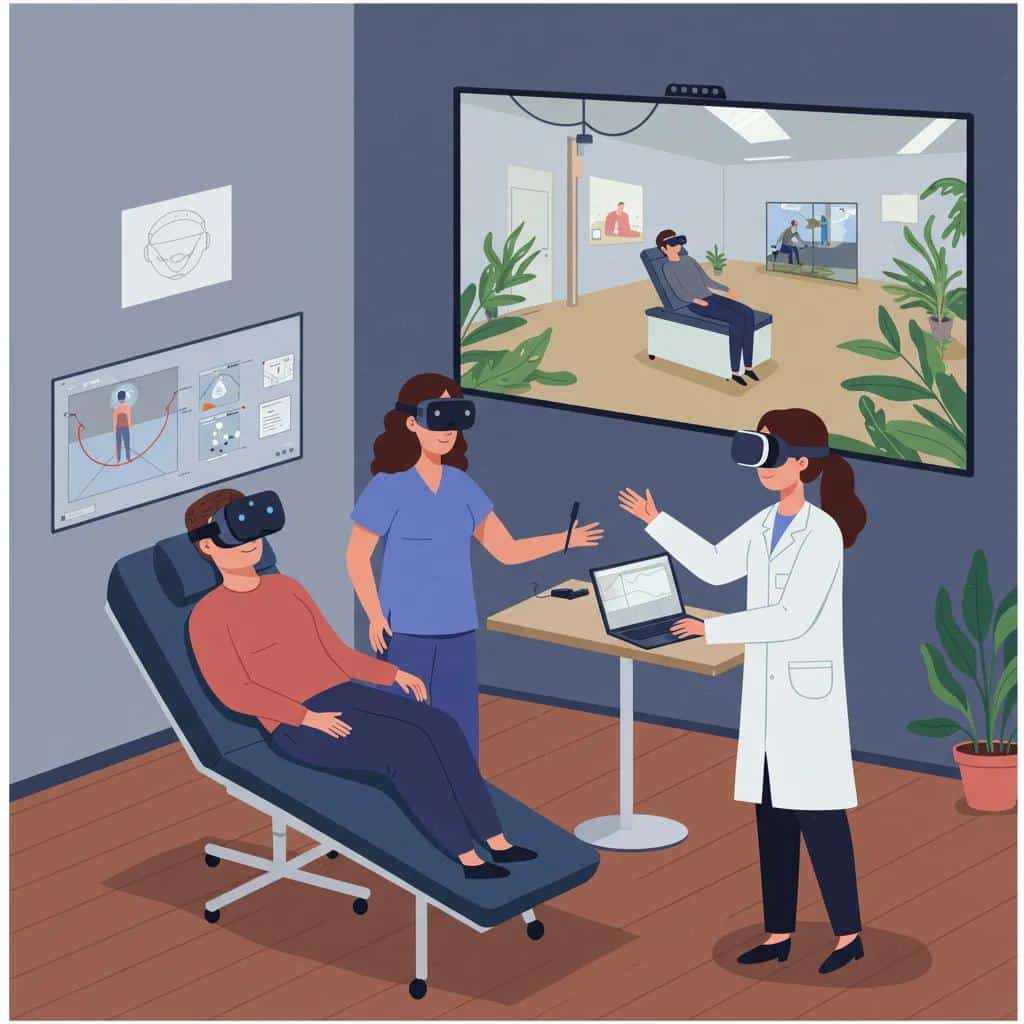
The primary psychological mechanisms include exposure and habituation, cognitive restructuring via VR-assisted CBT, skills rehearsal through simulated practice, and attentional shift that reduces acute distress or pain perception. Exposure within VR reduces avoidance by allowing safe re-experiencing and corrective learning, which weakens fear responses over repeated sessions. VR-CBT leverages immersive scenarios to make cognitive reframing exercises concrete, linking thoughts, emotions, and behaviors within a believable context. Skills rehearsal—such as practicing social interactions—builds procedural memory through repetition, increasing real-world confidence. Lastly, distraction and immersive relaxation environments modulate attention and sensory processing, which can reduce perceived intensity of pain or cravings during acute moments.
Which Mental Health Conditions Benefit Most from Virtual Reality Therapy?
Virtual reality therapy has demonstrated strong applicability across several mental health conditions by adapting exposure, rehearsal, and modulation techniques to disorder-specific triggers and functional goals. Clinicians typically select VR protocols based on symptom profile, treatment history, and safety screening, and these protocols can be integrated into broader CBT, medication management, or group work. The following clinical use cases summarize how VR is applied and what outcomes are commonly targeted in practice. This section also includes a compact comparison table to help clinicians and patients quickly scan typical applications and expected benefits.
Virtual reality offers tailored approaches that make it suitable for complex clinical presentations when used as an adjunct to standard care.
| Condition | VR Application | Clinical Benefit | Typical Outcome |
|---|---|---|---|
| PTSD | Virtual Reality Exposure Therapy (VRET) with personalized trauma cues | Controlled re-experiencing and habituation | Symptom reduction, improved functioning |
| Specific Phobias | Graded exposure scenarios (heights, flying, spiders) | Rapid desensitization in safe setting | Decreased avoidance, increased daily activity |
| Social Anxiety | Simulated social interactions and public speaking rehearsals | Skills rehearsal and feedback | Greater confidence, improved participation |
| Addiction/Cravings | Cue-exposure and coping skills practice | Reduced reactivity to triggers, relapse prevention | Lower craving scores, better coping |
| Pain Management | Immersive distraction and mindfulness environments | Attention shift and relaxation responses | Reduced reported pain intensity |
This table highlights condition-specific VR uses and the typical outcomes clinicians aim for, making it easier for patients and providers to discuss whether VR is a reasonable adjunct to treatment.
How Is VR Exposure Therapy Used for PTSD Treatment?
VRET for PTSD adapts exposure-based principles to immersive simulations reflecting trauma-relevant cues while preserving clinician control over intensity and pacing. Sessions begin with assessment and safety planning, then proceed through imaginal or in-VR exposure tailored to the individual’s trauma narrative, often combined with cognitive processing strategies to integrate new, corrective learning. Therapists measure subjective distress and functional outcomes over time to guide dosing and progression, and patients typically complete a course of multiple sessions spread over weeks. Research framed in recent clinical reviews shows meaningful symptom reduction for many patients when VRET is delivered by trained professionals alongside other evidence-based interventions.
Research supports the efficacy of Virtual Reality Exposure Therapy (VRET) for PTSD, indicating its potential to significantly reduce symptoms when delivered by trained professionals.
Virtual Reality Exposure Therapy for PTSD: A Systematic Review
The use of Information and Communication Technologies, such as virtual reality, has been employed in the treatment of anxiety disorders with the goal of augmenting exposure treatment, which is already considered to be the first-line treatment for Post-traumatic Stress Disorder (PTSD). To evaluate the efficacy of virtual reality exposure therapy (VRET) in the treatment of PTSD, we performed a systematic review of published articles using the following electronic databases: Web of Science, PubMed, PsycINFO, and PILOTS. Eligibility criteria included the use of patients diagnosed with PTSD according to DSM-IV, the use of cognitive behavioral therapy (CBT) and the use of virtual reality for performing exposure. 10 articles were selected, seven of which showed that VRET produced statistically significant results in comparison to the waiting list. However, no difference was found between VRET and exposure treatment.
Efficacy of virtual reality exposure therapy in the treatment of PTSD: a systematic review, R Gonçalves, 2012
How Does VR Therapy Help with Phobias and Anxiety Disorders?
For phobias and anxiety disorders, VR delivers graded, repeatable exposure to feared stimuli without the logistical barriers of in-vivo exposure, increasing acceptability for many patients. A clinician can control stimulus intensity—distance from a spider, height elevation, or turbulence level—and use repeated short exposures to promote habituation and reduce avoidance. VR is also useful for generalized anxiety when integrated with CBT techniques that target worry and maladaptive thinking, enabling patients to practice coping strategies in realistic but controlled settings. Meta-analytic data indicate VR exposure outcomes approximate those of in-vivo exposure for many specific phobias, with advantages in convenience and patient willingness to engage.
Systematic reviews highlight that virtual reality exposure therapy is a valuable intervention for specific phobias, offering an effective alternative to traditional exposure methods.
Virtual Reality Exposure Therapy for Specific Phobias: A Systematic Review
Specific phobia is defined as a notable and continuous fear of a certain object or a situation that particularly impairs daily life and functioning. It is also one of the most common psychological disorders. Exposure-based interventions are commonly used in the treatment of specific phobias. However, some limitations of the standard methods require the need for alternative approaches. In light of this, the use of virtual reality technology in psychotherapy has become increasingly widespread in recent years and is now integrated with exposure therapy. Virtual reality provides real-time interaction using the computer-generated three-dimensional environment via variety oftechnological tools. Applications of virtual reality in exposure therapy have proven to be an important intervention method, especially in the psychopathologies such as specific phobias. In this study, virtual reality exposure therapy for the treatment of specific phobias is systematically reviewed.
Efficacy of virtual reality exposure therapy in the treatment of specific phobias: a systematic review, T Köskün, 2023
What Are the Applications of VR Therapy for Addiction Recovery?
In addiction treatment, VR is used to simulate high-risk environments and cues to practice coping strategies, strengthen relapse prevention skills, and desensitize conditioned responses to triggers. Cue-exposure within VR enables safe rehearsal of urge-management techniques—such as urge surfing, cognitive reframing, and behavioral planning—while therapists provide coaching and feedback. VR can also facilitate motivational enhancement by simulating consequences and helping patients rehearse alternative choices. Early trials suggest reductions in craving intensity and improved coping skill use, especially when VR is integrated into comprehensive CBT-based relapse prevention programs.
While early trials show promise, research on cue exposure therapy for addictions, including innovations with virtual reality, indicates that it is not consistently superior to comparison therapies.
Cue Exposure Therapy for Addictions: A Review Update with VR Innovations
A Pubmed/PsycInfo literature search was performed for cue exposure treatments for addictions from 2002 to 2009.
2. We located sixteen cue exposure therapy studies involving multiple addictions that were conducted between 2002 and 2009. Four of these studies consisted of clinical efficacy trials that assessed drug use after Cue Exposure Therapy (CET). In three of the four trials, cue exposure was no better or worse than the comparison therapy. Two trials showed somewhat worse retention in those receiving CET and one appeared to have higher relapse rates in those receiving CET. We did not find evidence of safety concerns in any of the four trials. Several promising methodological innovations included use of virtual reality, medication augmentation, investigation of renewal effects, use of fMRI methods, and study of individual differences.
Progress in cue exposure therapy for the treatment of addictive disorders: a review update, 2010
How Does VR Support Social Anxiety and Social Skills Training?
VR provides a safe, repeatable space for patients to practice social interactions, public speaking, and conversational skills with variable audience size and complexity. Real-time therapist coaching and automated feedback allow clinicians to scaffold exposure—starting with brief scripted interactions and progressing to dynamic, unpredictable social scenarios. Role-play within VR helps consolidate behavioral skills like eye contact, turn-taking, and assertive communication through repeated practice and direct feedback. Clinical reports show measurable gains in confidence and social functioning, and VR’s privacy and controlled escalation often increase willingness to engage compared with live exposure.
Can VR Therapy Aid in Pain Management and Depression?
VR aids pain management through immersive distraction techniques, guided relaxation environments, and biofeedback-integrated experiences that shift attention away from nociceptive signals and promote relaxation responses. In acute procedural pain and some chronic pain conditions, immersive VR often reduces reported pain intensity and anxiety during procedures. For depressive symptoms, VR is typically adjunctive—used to support behavioral activation, deliver pleasant immersive environments, or practice social interactions that reinforce engagement. When combined with psychotherapy and medication when appropriate, VR can help patients build enjoyable, reinforcing experiences that counteract withdrawal and rumination, contributing to broader treatment aims.
What Are the Key Benefits of Virtual Reality Therapy for Mental Health Patients?
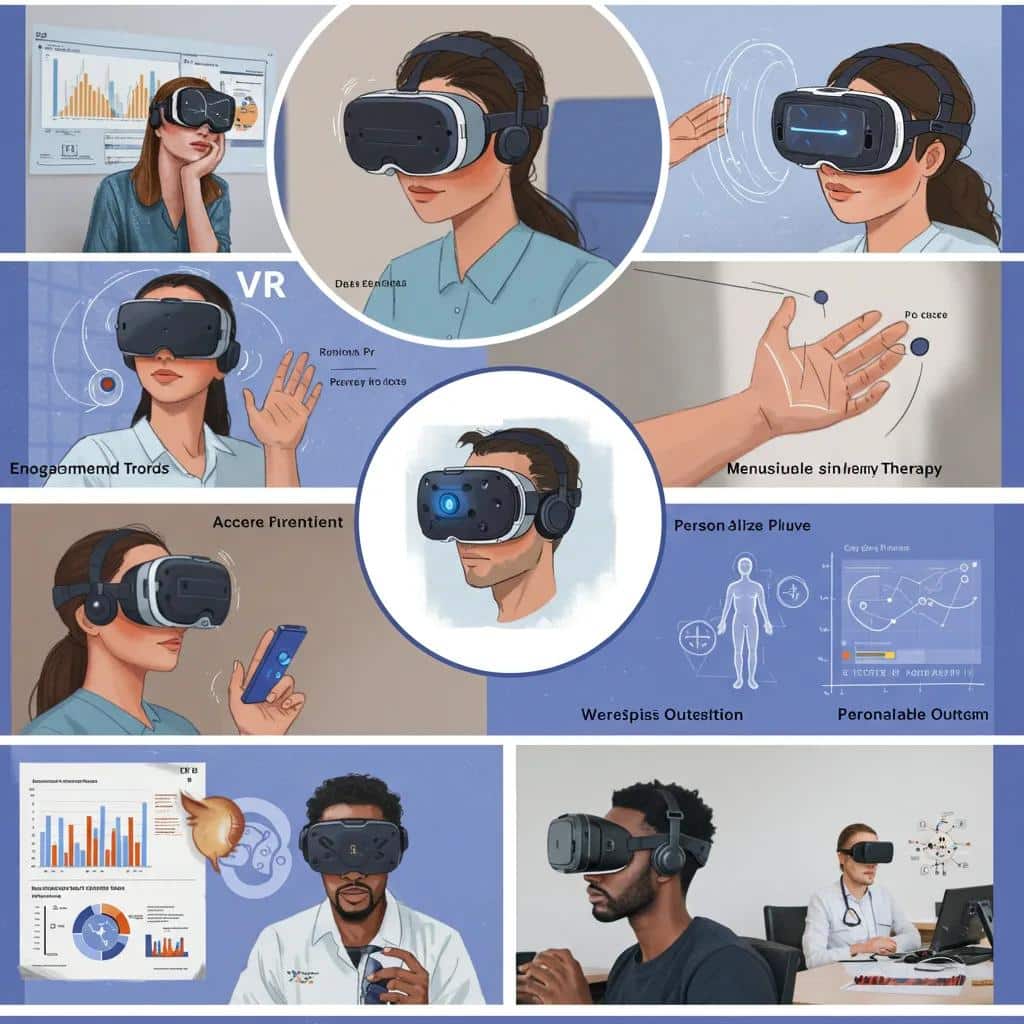
Virtual reality therapy delivers distinct advantages that enhance traditional treatment: heightened engagement, precise personalization, controlled exposure, objective session data, and expanded accessibility through hybrid delivery models. These benefits stem from VR’s ability to make therapeutic tasks experiential, measurable, and repeatable, which increases both adherence and the potential for measurable functional gains. Clinicians can tailor scenarios to specific fears, cravings, or skills deficits and track physiological or self-report metrics across sessions to refine treatment plans. Accessibility gains include the potential for clinic-based supervised sessions and telehealth-supported home use, reducing travel barriers for patients across Orange County. The following list summarizes core advantages with brief explanations.
- Enhanced Engagement: Immersive scenarios increase focus and motivation to complete therapeutic exercises.
- Personalization: Clinician-controlled scenarios adapt intensity and content to individual goals and progress.
- Controlled Exposure: Safe, repeatable exposure reduces risk while enabling corrective learning.
- Measurable Outcomes: Session metrics and standardized scales allow objective tracking of change.
- Accessibility: Hybrid models expand reach for patients with mobility, transportation, or scheduling barriers.
These benefits make VR a compelling adjunct to established therapies, and they set up practical questions about local availability and how providers integrate the technology into care.
| Benefit | Mechanism | Evidence / Example |
|---|---|---|
| Engagement | Immersion increases attention and task adherence | Studies report higher session completion rates with VR adjuncts |
| Personalization | Therapist can tailor scenarios and pace | Tailored VRET shows better tolerability than generic exposure |
| Safety & Control | Gradual intensity reduces overwhelm | Therapist pause and debrief options maintain safety |
| Accessibility | Telehealth + clinic options reduce travel | Hybrid delivery supports rural and urban patients alike |
This EAV table clarifies how each core benefit operates and links it to practical evidence or application to aid decision-making.
After covering benefits, Huntington Beach Mental Health offers a local perspective for Orange County residents interested in exploring VR as part of care. The practice serves as a lead-generation and information hub offering standard services including Cognitive Behavioral Therapy, individual and group therapy, medication management, and crisis intervention; their current online listings do not explicitly mention virtual reality therapy. Patients curious about VR-assisted options are encouraged to contact the practice for an assessment to determine appropriateness, learn about any current VR offerings, and discuss how VR could integrate with existing individualized treatment plans. This brief local note helps Orange County readers connect educational content to available regional care while keeping clinical details and evidence at the forefront.
How Does Huntington Beach Mental Health Implement Virtual Reality Therapy?
Huntington Beach Mental Health approaches VR integration by emphasizing evidence-based protocols, individualized assessment, and clinician oversight so that immersive technology complements—rather than replaces—core therapeutic work. Implementation begins with intake and clinical evaluation to screen for suitability, identify target symptoms, and rule out contraindications; this ensures VR is used where it best augments psychotherapy or skills training. When appropriate, VR modules are blended with CBT, exposure, or coping-skill curricula and scheduled within the overall treatment plan, with progress monitoring and adjustment as needed. Clinicians document outcomes with standardized measures and use session data to tailor exposures and reinforce real-world carryover of practiced skills.
What Is Our Approach to Integrating VR Therapy into Individualized Treatment Plans?
The integration process follows a clinician-led sequence: assessment and safety screening, goal-setting, selection of VR protocols aligned with therapeutic aims, supervised sessions with real-time coaching, and outcome monitoring to guide progression. Screening considers symptom severity, dissociative tendencies, and any neurological issues that could increase risk, ensuring patient safety and appropriateness. Selected VR content—exposure scenarios, social simulations, or relaxation environments—is matched to measurable goals and incorporated alongside talk therapy, skills training, or medication management when clinically indicated. Ongoing measurement enables clinicians to adjust dose and complexity to optimize outcomes and support transfer of gains to daily life.
How Can Orange County Residents Access VR Therapy Services?
To access VR-informed care at a local practice, patients typically begin with an intake appointment to assess clinical needs and discuss treatment options, including whether VR is appropriate as an adjunct. Availability may include in-clinic supervised VR sessions for initial exposure and assessment, followed by hybrid models where telehealth supports home-based practice when safe and feasible. Huntington Beach Mental Health invites Orange County residents to inquire during intake about VR possibilities, insurance questions, and referral pathways; staff can explain current offerings and schedule assessments for interested individuals. This stepwise access model keeps clinical judgment central while reducing logistical barriers and encouraging timely engagement with care.
What Are Common Questions About Virtual Reality Therapy for Mental Health?
Patients and families commonly ask about what VR can treat, how effective it is for anxiety and PTSD, and what risks exist—questions that influence willingness to try the modality and expectations for outcomes. Clear, direct answers grounded in current research and clinical practice help reduce uncertainty and enable informed consent. The next subsections list top clinical use cases, summarize effectiveness for anxiety and PTSD, and outline risks and contraindications with safety mitigations clinicians employ. These concise responses are optimized for people seeking quick yet evidence-informed guidance before taking next steps.
What Are the Top Clinical Use Cases of VR Therapy in Mental Health?
VR therapy is most commonly used as an adjunct for PTSD, specific phobias, social anxiety, addiction-related craving management, and pain modulation due to its capacity for controlled exposure and skills rehearsal. Each use case leverages VR’s immersive features: VRET for trauma reprocessing, graded exposure for phobias, simulated social interactions for skills training, cue-exposure for addiction relapse prevention, and distraction or relaxation environments for pain relief. Clinicians select VR when these mechanisms directly address the patient’s functional goals and when therapist oversight can ensure safe progression. The focused applicability across these domains makes VR an efficient adjunct for targeted symptom reduction.
How Effective Is Virtual Reality Therapy for Anxiety and PTSD?
Current research shows VR-assisted interventions—especially VRET and VR-CBT—produce clinically meaningful reductions in anxiety and PTSD symptoms for many patients, with effect sizes in line with traditional exposure methods in several trials. Meta-analytic summaries indicate consistent symptom improvements, though results vary by study design, population, and protocol fidelity; combining VR with established psychotherapeutic frameworks typically yields better outcomes than standalone VR exposure. It’s important to view VR as a modality that enhances proven therapies rather than a universal replacement, and clinicians commonly use it alongside cognitive restructuring and other evidenced strategies to maximize durability of gains.
Are There Any Risks or Contraindications Associated with VR Therapy?
VR therapy carries manageable risks such as cybersickness—nausea, dizziness, or headaches—and may be contraindicated or used cautiously in individuals with seizure disorders, severe dissociation, or uncontrolled psychosis; clinicians perform screening and adopt safety protocols accordingly. To mitigate side effects, therapists use short exposures, frequent breaks, adjustable sensory settings, and close supervision, and they maintain the ability to pause and debrief immediately after provocative scenarios. Informed consent includes discussion of these risks and the steps taken to reduce them, and ongoing monitoring ensures that any adverse effects are identified and addressed promptly to maintain patient safety and therapeutic integrity.
At the end of these FAQs, Huntington Beach Mental Health offers compassionate next steps for Orange County residents: schedule an intake to discuss whether VR is appropriate, ask about insurance verification during the intake conversation, and request an assessment for individualized planning. This local guidance helps high-intent readers move from education to enrollment while preserving the article’s educational emphasis.
How Is the Future of Virtual Reality Therapy Shaping Mental Health Treatment?
The future of VR therapy is shaped by accelerating research evidence, growing market adoption of clinically focused platforms, and integration with telehealth models that increase access and continuity of care. Recent studies and meta-analyses through the current timeframe indicate expanding evidence bases for VRET and VR-CBT across anxiety, PTSD, and phobia domains, while technology improvements—better headsets, lower latency, and integrated biometrics—enhance usability and measurement. Market trends point to greater adoption among clinical providers and digital therapeutic vendors, and regulatory and reimbursement conversations are evolving to support evidence-based implementations. For patients, these shifts mean broader availability of validated VR protocols and improved integration with existing mental health services over the coming years.
| Trend / Metric | Source / Study | Implication for Patients |
|---|---|---|
| Growing clinical trials | Recent systematic reviews | Stronger evidence base for targeted disorders |
| Platform improvements | Tech development reports | Better immersion, reduced side effects |
| Telehealth integration | Healthcare delivery analyses | Easier access, hybrid care continuity |
This trends table summarizes why recent progress matters to patients: better evidence, improved technology, and broader accessibility combine to make VR a more practical adjunct for routine care.
What Are the Latest Research Findings and Market Growth Projections?
Recent research emphasizes positive outcomes for VRET and VR-CBT in anxiety-related disorders and highlights the need for standardized protocols and larger trials to refine effect estimates. Market analyses show increasing investment in clinical VR platforms and partnerships between digital therapeutics companies and healthcare providers, signaling broader adoption in clinical settings. These developments imply that validated VR modules will become more widely available as components of standard care pathways, enhancing options for patients who benefit from experiential therapies that target avoidance and skill rehearsal.
How Is Telehealth Enhancing VR Therapy Accessibility in California?
Telehealth expands VR accessibility by enabling clinician-guided remote sessions, standardized protocol delivery, and remote outcome monitoring that supports continuity across geographic areas. Hybrid models allow initial supervised in-clinic exposures followed by telehealth-assisted home practice when clinically appropriate, reducing travel burdens for Orange County residents and increasing scheduling flexibility. Huntington Beach Mental Health remains committed to evidence-based, evolving therapies and encourages patients to inquire about future VR offerings as telehealth and clinical platforms continue to advance. This forward-looking stance helps local patients understand how innovation may increase treatment options in the near term.
Key steps for patients to prepare for emerging VR options:
- Discuss interest with your clinician: Share symptom goals and ask about VR suitability.
- Complete screening: Ensure safety considerations are addressed before starting VR.
- Plan integration: Work with clinicians to blend VR with therapy goals and follow-up monitoring.
These actionable steps help patients move from curiosity to informed discussion with providers about whether VR-assisted interventions are right for their care pathway.
- Identify goals: Clarify symptom targets such as avoidance reduction or craving management.
- Ask about protocols: Inquire whether VR is used with CBT or exposure frameworks.
- Verify access: Ask providers about supervised sessions, telehealth options, and how outcomes are tracked.
As VR evolves, patients who engage proactively with clinicians will be best positioned to benefit from validated, clinician-led implementations.