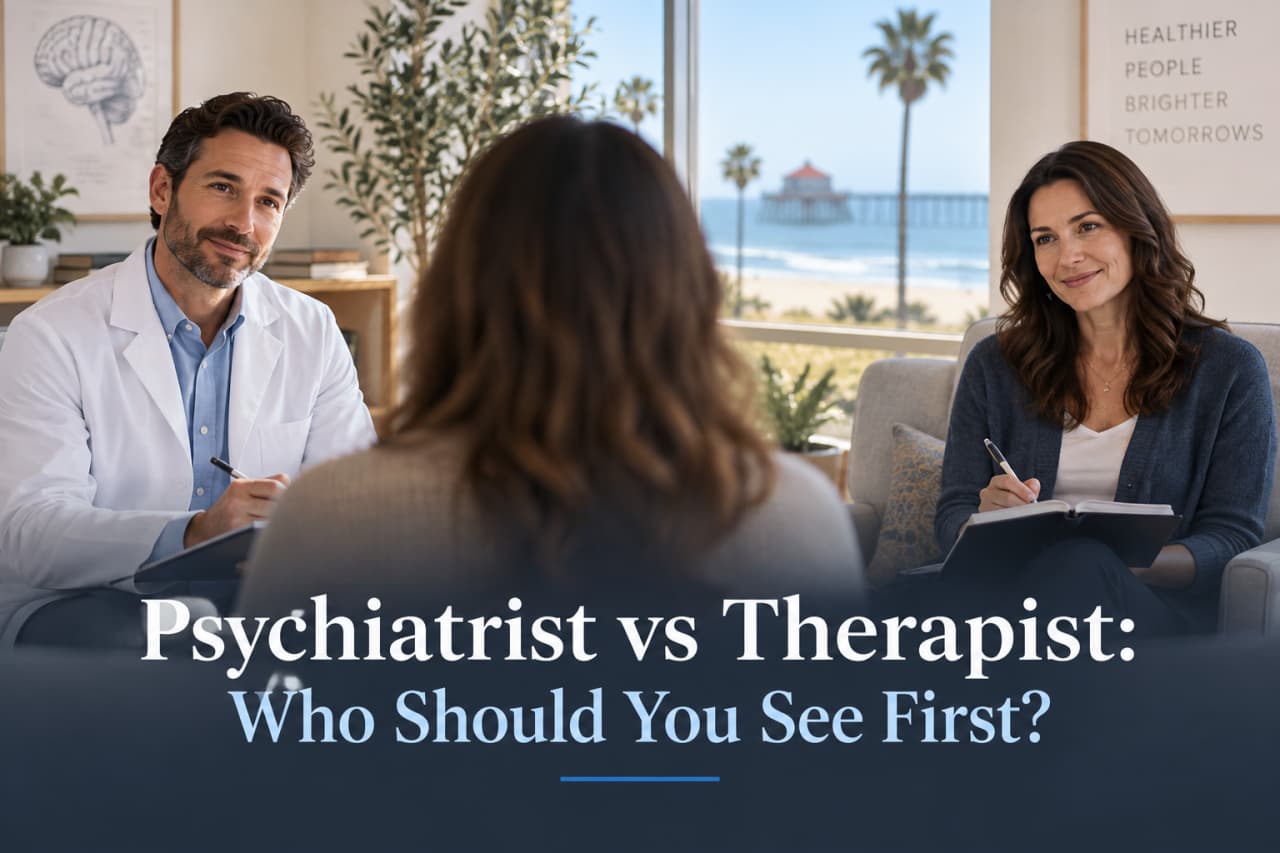

Outpatient mental health treatment is a structured care option that helps a patient improve their health and manage symptoms while living at home. Unlike inpatient mental health care, outpatient programs do not require staying overnight at a facility. At Huntington Beach Mental Health, we offer outpatient services that give people access to therapy, psychiatric care, and other support to improve their quality of life.
This guide explains what outpatient mental health treatment involves, who it is for, its benefits, and what to expect when you begin care by secure video with our practice in Huntington Beach.

Understanding Outpatient Mental Health Treatment
Outpatient mental health treatment provides ongoing care through scheduled visits to a clinic or physician’s office. Patients attend therapy, psychiatry, and skill-building sessions at set times and return home afterward. This level of care is effective for conditions such as anxiety, bipolar disorder, borderline personality disorder, personality disorder, attention deficit hyperactivity disorder, eating disorders, substance abuse, and others.
There are several levels of outpatient care:
- Standard Outpatient Services (OP): Weekly or biweekly individual or couples therapy sessions to improve understanding of emotions and behavior.
- Intensive Outpatient Programs (IOPs): More structured, with multiple therapy sessions per week, including dialectical behavior therapy, exposure therapy, and meditation for stress management and suicide prevention.
- Partial Hospitalization Programs (PHP): The most intensive outpatient option, similar to inpatient mental health day programs, focused on crisis intervention and relapse prevention.
These treatment programs help individuals work on coping skills, manage fear, and improve sleep, while reducing risks of suicidal ideation or relapse.
Who Benefits from Outpatient Treatment?
Outpatient mental health treatment works well for patients who:
- Have a stable home environment with accessibility to care.
- Do not need 24-hour monitoring or emergency crisis intervention.
- Are leaving an inpatient mental health program but need ongoing support.
- Want to continue work, school, or family responsibilities.
At Huntington Beach Mental Health, our outpatient services help people manage stress, build insight into their mind and emotions, and maintain progress.
Conditions Treated in Outpatient Programs
Our practice treats a wide range of mental health conditions by secure video, including:
- Anxiety disorders
- Bipolar disorder
- Borderline personality disorder
- Personality disorder diagnoses
- Attention deficit hyperactivity disorder
- Depression with suicidal ideation or sleep problems
- Trauma-related disorders, including fear and relapse risk
- Eating disorders
Our team uses a combination of psychology, psychiatry, and evidence-based therapy to help each patient achieve lasting results.

What Happens in Outpatient Treatment?
When you begin at Huntington Beach Mental Health, you will first receive a full evaluation. We assess symptoms, behavior, and emotion regulation needs, and we note any substance use so we can help you find the right program.
Treatment typically includes:
Individual Therapy
One-on-one sessions focus on improving insight, regulating emotion, and learning coping skills through methods like dialectical behavior therapy, exposure therapy, and meditation.
Group Therapy
Group sessions help improve understanding, foster support, and teach stress management skills for everyday life.
Psychiatric Services
Our psychiatric providers and physicians manage medications, such as for anxiety, bipolar disorder, or attention deficit hyperactivity disorder, and monitor your progress.
Couples Therapy and Family Education
Sessions for couples and families improve communication, resolve conflicts, and teach healthy behavior patterns.
Skills and Psychoeducation
We provide education on your condition, teaching you how to handle stress, reduce fear, and improve sleep. Topics also include suicide prevention and crisis intervention strategies.
For some patients, a physician or psychiatric provider may refer them to specialized treatments like electroconvulsive therapy or psychoanalysis as part of long-term care.
Benefits of Outpatient Mental Health Treatment
Outpatient care offers clear benefits:
- Accessibility: Get care close to home with a flexible schedule.
- Cost-effective: Often more affordable than inpatient mental health care.
- Continuity: Helps you avoid relapse after hospital discharge.
- Privacy: Receive mental health treatment discreetly while maintaining your lifestyle.
- Skill building: Learn new coping and stress management techniques.
Our practice helps you regain control of your mind, improve quality of life, and build understanding of your behavior and emotions.
Choosing the Right Outpatient Program
Our team helps you choose the best program based on your evaluation, insurance coverage, and personal goals.
- For mild symptoms, standard outpatient therapy may be enough.
- If you need more structure, IOPs offer intensive mental health treatment several times a week.
- If you’re stepping down from hospitalization, a PHP may fit your needs.
We work with most insurance plans to ensure our treatment programs are affordable and accessible.
Why Choose Huntington Beach Mental Health?
At Huntington Beach Mental Health, we are committed to providing effective mental health treatment. Our experienced team includes licensed psychology and psychiatry professionals, skilled therapists, and supportive staff. We use proven approaches, including dialectical behavior therapy, exposure therapy, and psychoanalysis, to treat each patient with compassion.
Our practice serves residents throughout Orange County by secure video, with services that focus on improving your quality of life.
Take the First Step
If you or a loved one is struggling with anxiety, stress, depression, or another mental health condition, our outpatient services can help. Call us today to schedule your evaluation. Our team will guide you through your options and help you begin a program that fits your needs and improves your quality of life.
We also offer inpatient mental health referrals for individuals who need more intensive support. Our goal is to help every patient build resilience, reduce fear, and avoid relapse.

Frequently Asked Questions
1. What types of therapy are offered for mental health and substance abuse?
At Huntington Beach Mental Health, we offer a variety of therapy options by secure video for mental health, and we can help you find substance use care. Individual and group therapy sessions help patients improve their health, learn effective coping strategies, and address underlying issues. We use evidence-based approaches such as dialectical behavior therapy for borderline personality disorder and anxiety, as well as exposure therapy for trauma-related conditions. If you are managing both a mental illness and an addiction to alcohol or drugs, we can treat the mental health condition and help you find a program for the addiction.
2. How does outpatient treatment improve quality of life for patients with mental health conditions?
Outpatient mental health treatment focuses on helping patients stabilize their symptoms while continuing to live at home. This level of care can improve quality of life by teaching skills for emotional regulation, coping with daily stress, and building stronger relationships. People with conditions like anxiety, borderline personality disorder, and attention deficit hyperactivity disorder often find that consistent therapy and support help reduce suicidal ideation, improve sleep, and restore a sense of balance and purpose.
3. What therapies are available for severe mental health symptoms?
For severe or treatment-resistant symptoms, a psychiatrist may refer you to advanced therapies when they fit. Options include electroconvulsive therapy, which can help when traditional therapy and medication are not effective. We also provide dialectical behavior therapy, which is highly effective for patients struggling with borderline personality disorder, suicidal ideation, or intense emotional distress. These therapies aim to stabilize symptoms and improve overall health and functioning.
4. Can outpatient care help with addiction and co-occurring disorders?
Our programs do not treat addiction, but we treat the anxiety or depression that often comes with it and can help you find a substance use program. Many patients face both substance abuse, such as alcohol use, and a mental health disorder like anxiety or attention deficit hyperactivity disorder. We treat the mental health condition while a substance use program treats the addiction, and that pairing supports long-term recovery. With individualized therapy, group support, and evidence-based practices like dialectical behavior therapy, patients can develop coping skills, improve their sleep, and maintain their health and quality of life.